
If you are looking to grow a flower that adds a kaleidoscope of vivid color to your garden but without a lot of fuss, then lantana is the plant for you! Grown as a shrub perennial in warmer climates and as an annual in places that experience winter frosts, lantana is a low-maintenance flower that will produce blooms throughout the whole summer.
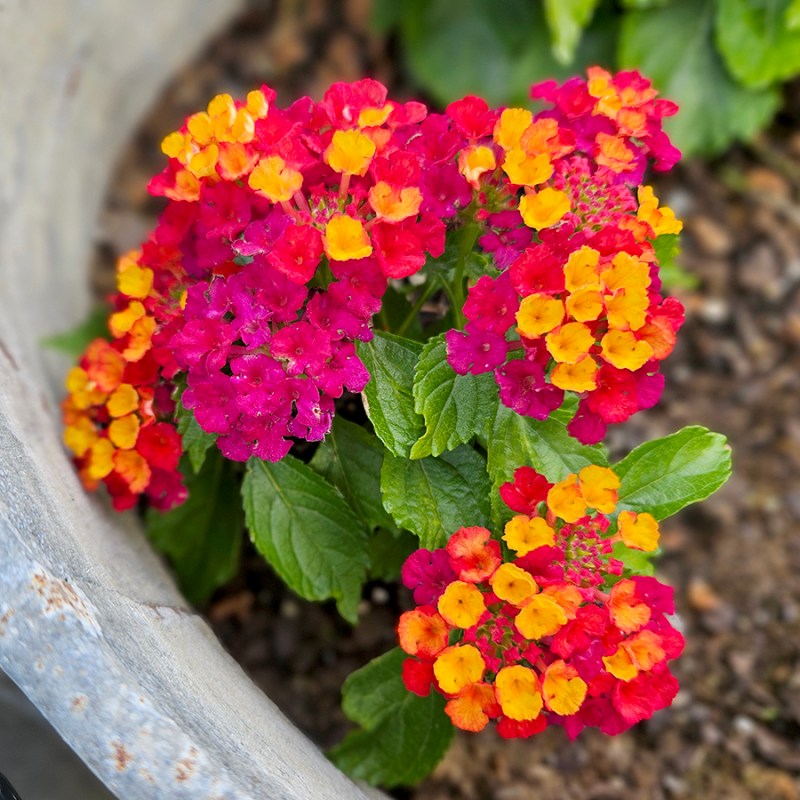
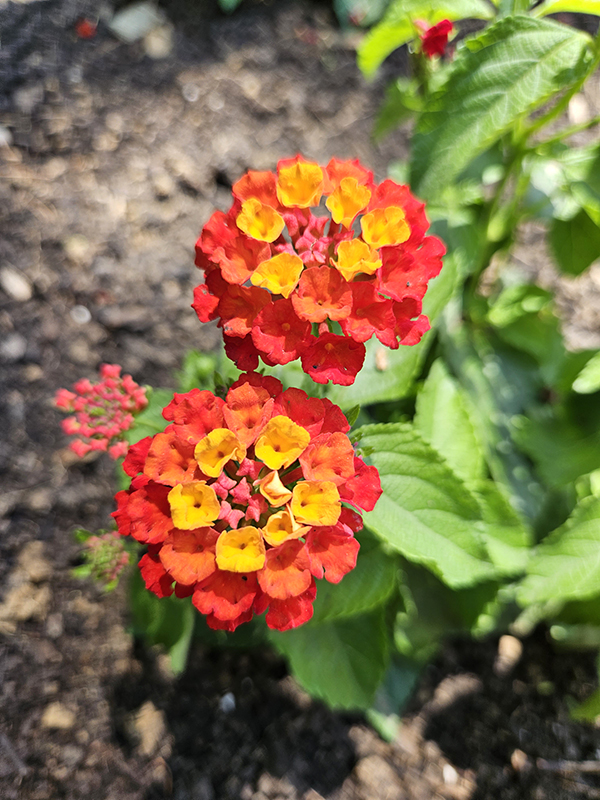
Each lantana plant produces several clusters of blooms that start out one color and change as the plant ages. This allows each cluster to have multiple colors that can range from pink, purple, red, orange, yellow, blue, and white, depending on the variety.
Not only is this flower stunning, but it is also great for attracting pollinators in droves. Whether you grow it directly in the ground, in pots and containers, or in hanging baskets, lantana can brighten up any location.
One of the best parts of lantana is that it is very heat-tolerant and can thrive in locations with high humidity (hello, Illinois!) or dry heat. It’s a great flowering plant for beginners!
Quick Facts About Lantana
- Considered an evergreen perennial in USDA Growing Zones 8-11. Here in Illinois (Zone 5) and other colder locations, it is grown as an annual.
- As a perennial, it grows as a flowering shrub. Some varieties can reach heights of over 6 feet tall and wide!
- Most often grown from transplants or cuttings. Can be grown from seeds, but not all harvested seeds will produce true plants.
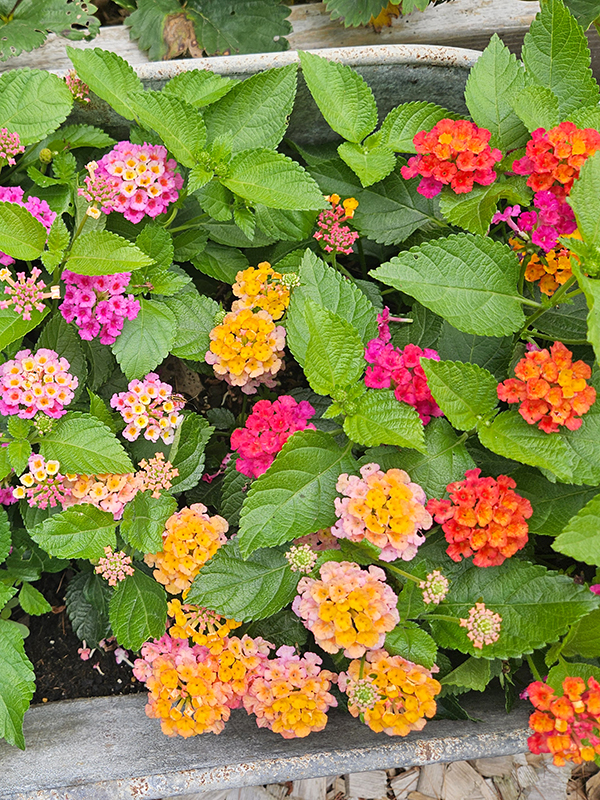
- Tubular blooms are popular with pollinators, especially butterflies and hummingbirds.
- Continually produces blooms if the temperature stays above 55º Fahrenheit (F).
- Prefers well-draining soil.
- Loves high heat and humidity.
- Requires full sun (6+ hours) in order to produce multiple clusters of bright blooms.
- Flowers have a mildly citrus scent, but the foliage has an unpleasant scent to most. The foliage can cause mild skin irritation if touched.
- Plants are rabbit and deer-resistant, but birds love their seed berries.
- Toxic to cats, dogs, and horses. (Although I have a dog, and she’d never attempted to snack on lantana.)
- Considered invasive in some southern locations, such as Arizona, California, Florida, and Hawaii. (Check with your local extension office to see if you are allowed to grow lantana in your location. You might still be able to grow it in containers or raised beds.)
Requirements To Grow Lantana
Plant lantana in soil that is well-draining. If you have clay-like soil, consider using containers or hanging baskets instead. This allows you to have more control over the growing matter. It can also help to keep lantana from spreading.
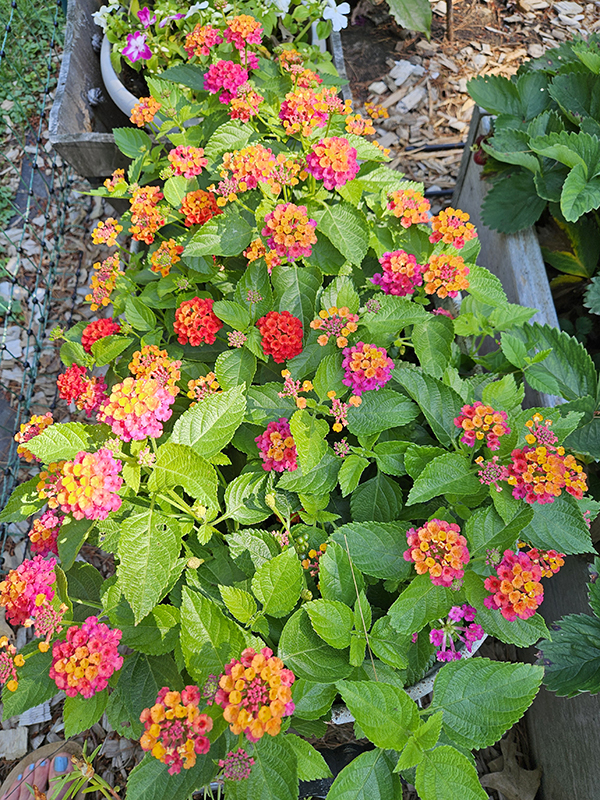
For annuals, the plants will only be in their location for one growing season. For perennials, consider that the plants can get upward of six feet tall when choosing your location. Check your specific variety to be sure.
Wait to plant lantana until the soil reaches 60º F, or when you plant your other warm-weather-loving crops. If you live in the south, that can be anytime, but it is usually in the spring for those of us who live further north or in the Midwest.
Place lantana in a location that receives full sun (at least 6 to 8 hours of direct sunlight). Without the proper sun, the plants might fail to produce their iconic blooms.
Long-Term Care – How To Grow Lantana
Even though the plants thrive in high temperatures, they need proper watering in order to do so. Plan to have a consistent watering plan so the plants get a deep drink of about an inch of water each week (either by rain showers or hand watering).
Potted or container plants will require watering more often. The main goal is to avoid letting the soil dry out completely. If you have sandy soil, you may need to water daily.
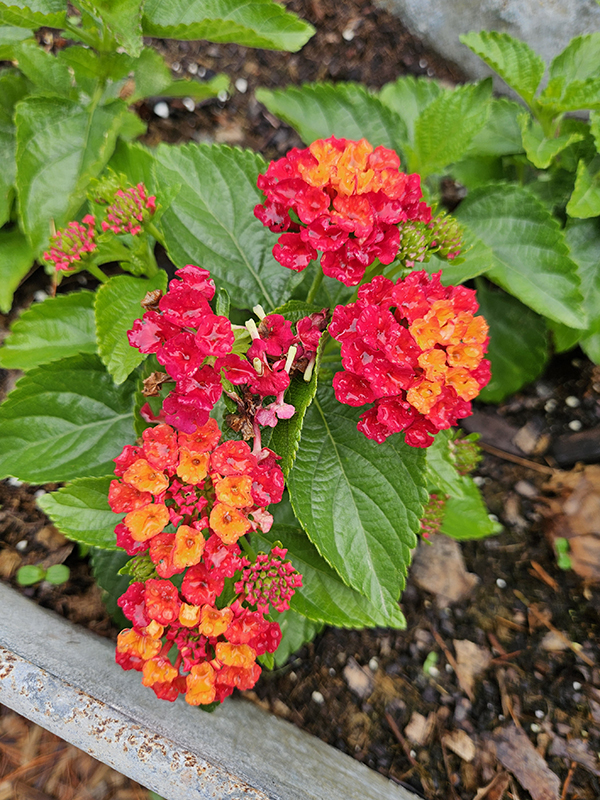
Even though lantana plants produce loads of blooms, they aren’t heavy feeders. However, a light dose of either a balanced fertilizer or one with a higher phosphorus number mid-season can be added if blooming slows down. Plants grown in containers can benefit from a once-a-month feeding. (Learn more about fertilizers in my article, “Understanding Fertilizers – What Does NPK Mean & How To Use It”.)
To help encourage flowering and prevent re-seeding, remove any faded blooms. Trim them back to where the main flower stem meets the main part of the plant. Pruning can also keep plants contained and from growing out of control. These are the tiny pruners I love using for this type of garden work, Fiskars 6″ Pruning Scissors (Product Link).
Propagating Lantana
The easiest way to propagate lantana is by using stem cuttings. This ensures that the new plant will have the same features as the parent plant.
Many lantana varieties are hybrids, which means that they were created by combining two different plants together to get certain desirable traits (like bloom colors). When you harvest and grow seeds from these plants, the new plant will be one of the original plants. (Learn more about hybrids in my article, “How To Save Garden Seeds – Open-Pollinated Vs Hybrid Seeds”.)
As lantana stems mature, they will turn woody and tough. Harvest the cuttings before this occurs. It can take around four weeks before the cutting starts to produce roots, so be patient.
Steps For Propagating
- Gather your supplies: A pair of clean pruners, a container with drainage holes, and seed starting soil. Optional is a rooting hormone. (Product Link: Garden Safe TakeRoot Rooting Hormone)
- Add premoistened potting soil to your container. The soil should hold its shape if squeezed but not dripping water.
- Create a hole that is a few inches deep and double the width of the cutting stem.
- Harvest a 4 to 6-inch cutting from an established plant. Remove the lower leaves, only leaving 2 to 3 at the top.
- If desired, dip the cut end in powdered rooting hormone. Add the cutting into the hole and backfill, lightly packing the soil down around the stem.
- Place the container in a location with indirect sunlight, like a south-facing windowsill. Keep the soil evenly moist, watering as needed. Keep watering as needed until the seedling can be transplanted outside.
Harvesting Seeds & Growing Lantana From Seed
As mentioned, most lantana plants are hybrids. The seeds from these plants will most likely grow into plants that look nothing like the parent plant – if they grow at all. Some of them might even be sterile. However, it can still be a fun and inexpensive way to grow additional plants and experiment with what is produced.
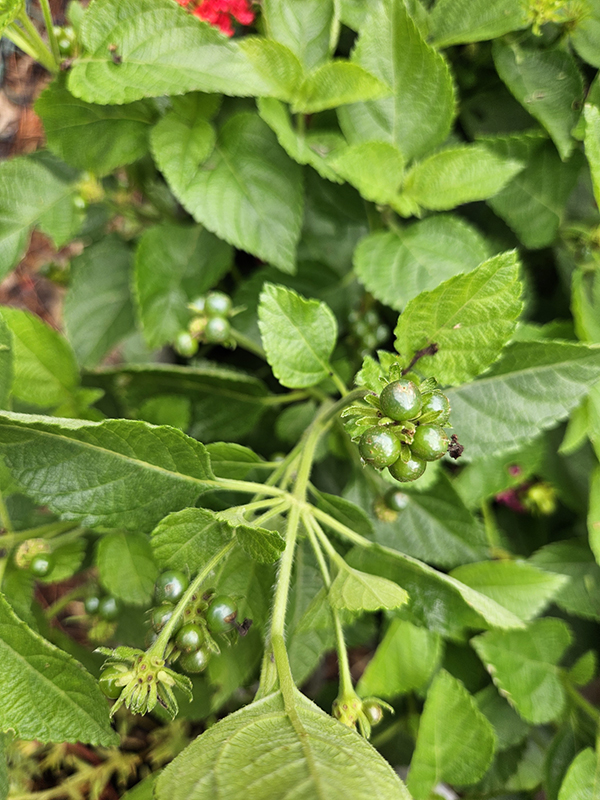
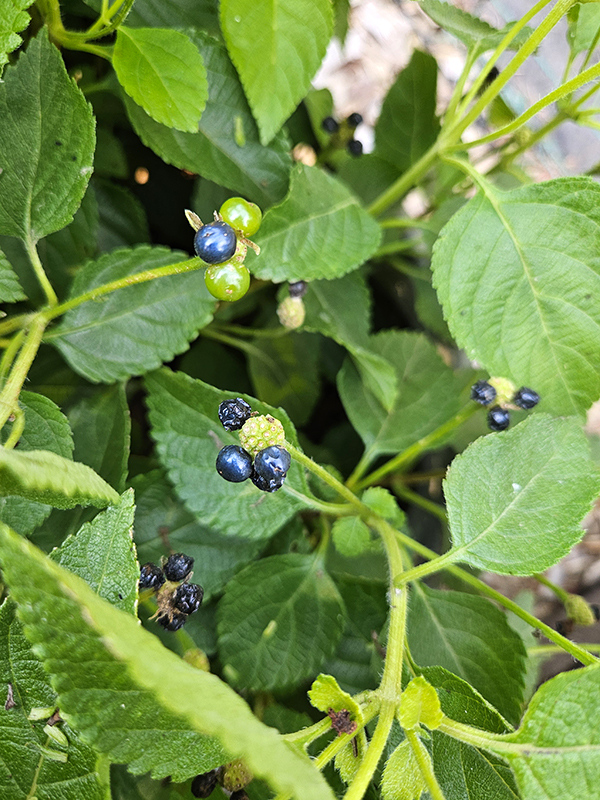
After a flower cluster fades, it starts to produce what looks like green berries. (Don’t eat them!) As the berries start to mature, they turn black and shrivel up. Inside these black, shriveled berries is the seed.
Steps To Grow Lantana By Seeds
- Allow the seeds to start to mature while still on the plants. If you wait too long, the seeds will fall onto the soil and be hard to find.
- Separate the seeds from the berry flesh. Give them a little rinse, then dry them on a piece of paper towel or paper plate for about a week.
- Once seeds are fully dry, store them in paper envelopes in the refrigerator to prolong their lifespan.
- Before planting, soak seeds for 24 hours in warm water.
- To start seeds indoors, fill well-draining containers with pre-moistened seed starting soil. Add a couple of seeds and cover with a bit of soil. Cover with plastic wrap or a clear lid.
- Keep the containers in a warm location and the soil moist until seeds germinate. This can take a LONG time, around 3 to 6 weeks (some can even take 8 weeks).
- Plant the seedlings outside once the soil temperature has reached 60º F. (For more in-depth information about starting seeds indoors, check out my complete guide, “Indoor Seed Starting 101 – A Complete Beginner’s Guide”.)
Frequently Asked Questions
How to encourage more blooms? Make sure lantana gets at least 6 hours of direct sunlight each day. Deadhead any spent blooms. Provide plants with a low dose of fertilizer that has a higher phosphorus concentration than nitrogen.
Does lantana require deadheading? No, but doing so will help encourage the plant to spend its energy on producing more blooms as opposed to turning the old ones into seeds/berries.

What to do if my lantana is leggy? Simply prune back the stems. This will encourage more branching out and allow the plant to grow bushier.
Can lantana be a houseplant? Unfortunately, lantana struggles to thrive in indoor locations. It is best grown as an annual if you can’t grow it outside year-round.
Should I grow lantana from seeds or propagation? Growing lantana from cuttings is much more reliable than from seeds. Many varieties of lantana are hybrids, so using cuttings ensures that the new plant will have the same characteristics as the parent plant.
Great Companion Plants
The best companion plants for lantana are those that have similar growing conditions. This includes flowers that crave sunlight, grow in well-draining soil, and help attract pollinators in droves. Mix in different textures, colors, and heights to keep your garden beautiful and interesting.
- Zinnias – With so many different varieties, colors, bloom styles, etc., there isn’t one garden that shouldn’t include zinnias (at least in my opinion!). These easy-to-grow flowers grow tall, so place them behind annual lantana.
- Snapdragons – These flowers produce loads of stunning, colorful blooms on tall spikes. However, Snapdragons start to fade when the heat of summer arrives. This allows the lantana blooms to shine instead.
- Marigolds – You can’t go wrong with growing marigolds in all gardens. These heavy-blooming flowers are not only pretty with their multiple fiery-colored blooms, but they are also great companion plants. Varieties of marigolds can be found ranging from dwarf plants to multiple feet tall, so be sure to check their mature height before planting around lantanas.
- Petunias – When growing lantana in containers, petunias are a great companion plant. They also produce multiple colorful blooms all summer long and can handle the heat summer throws at them.
Until next time, thanks for stopping by!
– Chelsea
*This post may contain affiliate links. These are products I have used personally and highly recommend. As an Amazon Associate, I may earn a small commission from qualifying purchases if you purchase items through my links. These links and the ads on this page help to support my family and our semi homestead, so Thank You!
Discover more from Semi Homestead Life
Subscribe to get the latest posts sent to your email.