
Hand-pollinating zucchini and other types of squash is an easy way to help guarantee that your plants produce fruit.
Are you noticing that your squash plants are putting out multiple baby fruit, only to have them shrivel up and die a few days later? What might be causing this to happen? Well, the main reason is because of improper pollination.

Poor pollination can occur for many reasons, including a lack of pollinators like bees and butterflies in your area. Temperature or climate issues also could be at play, such as high humidity or heavy rains. Lastly, a lack of either male or female blossoms on the plant can also be the culprit.
Whatever the reason, hand-pollinating is a way to give your struggling plants a “helping hand.” It’s a simple task that only takes a few minutes to do without any special tools or equipment needed.
Once you can correctly identify the different male and female blooms that a squash plant produces, you can easily perform this task to help ensure you have a tasty crop of harvestable squash all summer long!
Hand-Pollinating Zucchini & Other Squash Plants
The best time to perform hand pollinating is early in the morning when the blooms are nice and wide open. Often by early afternoon, most of the zucchini and squash blooms shut, and your chance at hand-pollinating is done for the day.
The lifespan of each squash bloom isn’t long either, which can also pose a challenge. While you will have several different blooms throughout the entire growing season, each bloom only opens up for one day.
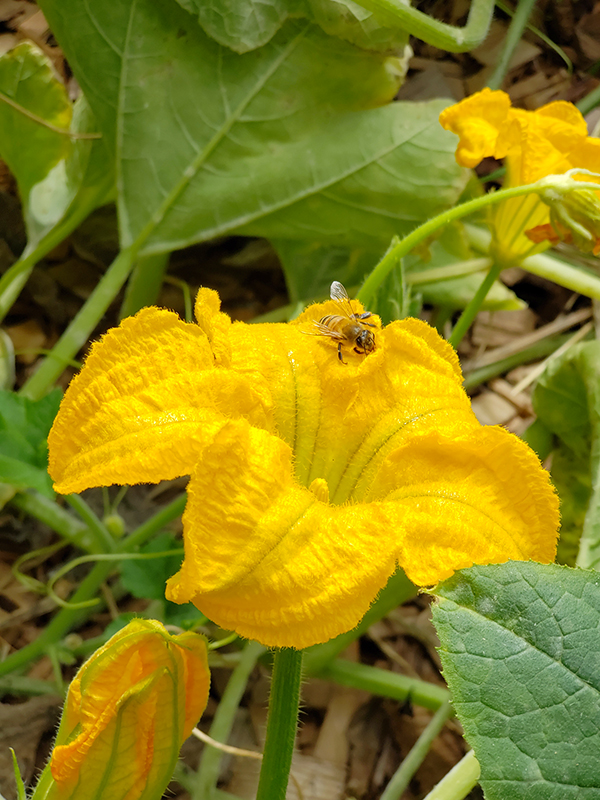
Once the male flower releases its pollen, it will detach itself from the plant and fall to the soil. The female flowers attached to the growing squash will close after the one day. Eventually, they will wither and dry up, whether they get pollinated or not.
So work fast and check back daily because your zucchini and other squash plants will continue to push out new blooms all growing season long. (That is as long as squash vine borers or squash bugs don’t start to wreak havoc!)
Step 1: Identifying The Proper Parts
Some plants like tomatoes, green beans, and bell peppers are self-pollinating. This means that the blooms on these plants have both female and male parts.
All a bee or insect has to do in order to pollinate those flowers is simply walk around inside the blooms, and there you go – the flower is pollinated! Even something as simple as the wind blowing or you walking past a plant and bumping into a stem can be enough to pollinate the bloom since everything is contained in each blossom.
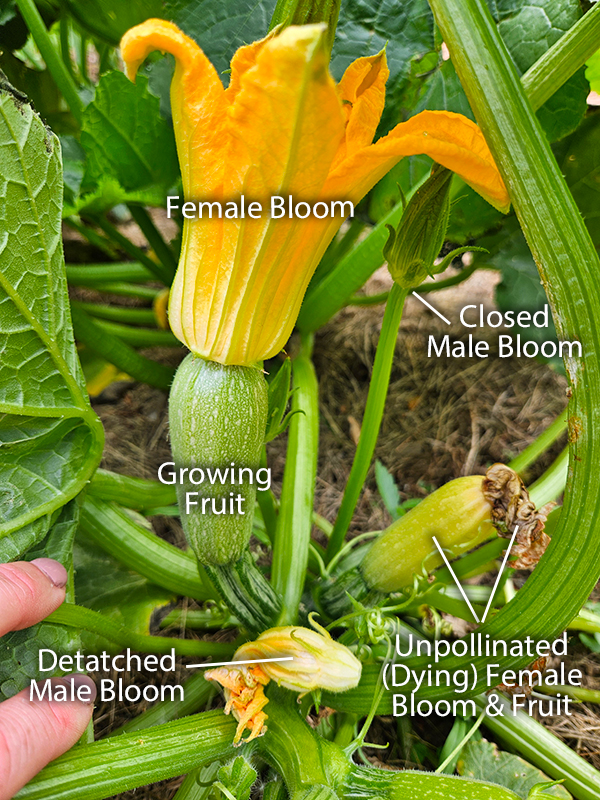
However, in the case of zucchini and other squash plants, each plant produces separate female and male blooms. In order for these plants to get pollinated, the pollen from the male flower must be transferred to a female flower.
It’s Anatomy Time!
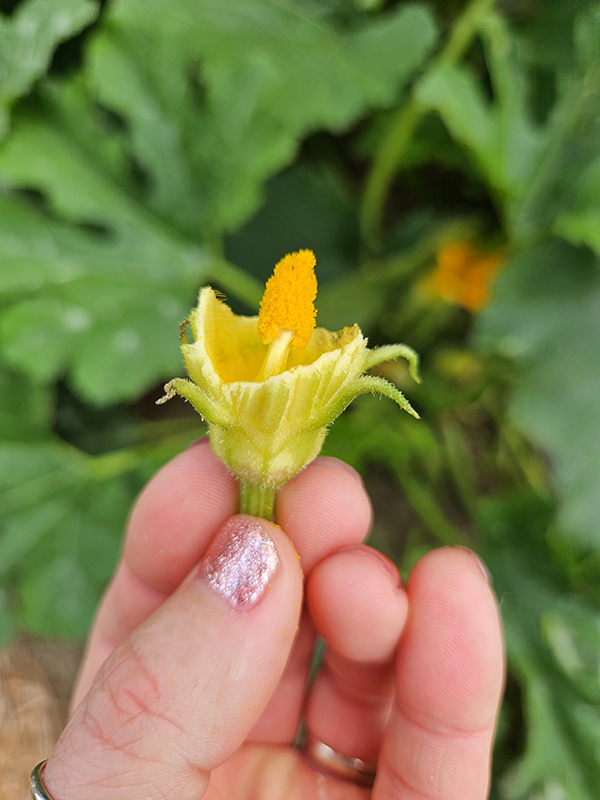
You can easily identify the male flowers from the female flowers. The male blooms will have skinny, pencil-straight stems with a flower immediately on the end of the stem.
Inside the male bloom is the stamen. The stamen contains the anther, which is the male reproductive cell. The anther is where you will find the pollen. You can easily see the anther and the pollen by looking closely at a male bloom.
Female flowers, on the other hand, have a swollen area directly behind the base of the flower petals (where they meet the stem). This swollen area is what will eventually turn into the squash fruit.
Inside the female blossom is the pistil. The pistil contains the stigma, which is the part of the female reproductive system that needs to receive the pollen in order to become pollinated.
Don’t be surprised if, at first, you only see male blooms on your plant. When a zucchini or squash plant first starts to grow, it typically only produces male blooms. As the plant matures and becomes established, both female and male flowers can be identified.
Step 2: Transfer The Pollen – Hand-Pollinating Zucchini
There are a couple of different ways you can transfer the pollen from the male flowers to the female flowers. The first is my preferred method, and that is using the flower itself.
Using a pair of small pruners or snips, cut off the male bloom from the plant. Since the blooms only live for a day or so, you don’t have to feel bad about doing this. (Here are the small pruners I use ALL the time in my garden – Product Link: Fiskars Micro-Tip Pruning Shears.)
Once that’s done, carefully remove all of the flower petals from around the stamen. This allows you to easily see the anther and pollen without the petals getting in the way.
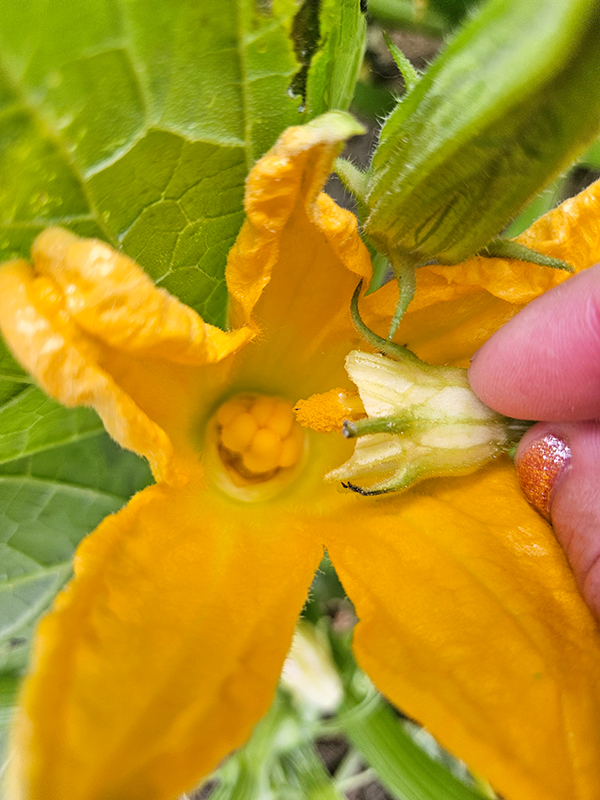
Now, find a female blossom that is open. Rub the anther around the stigma that is in the middle of the female bloom. The pollen should easily fall off onto the stigma. The more pollen you transfer, the better your odds are.
Congratulations, you just hand-pollinated your first zucchini or squash blossom!
Additional Notes
If you have additional female blooms open, you can use the same male flower to pollinate those as well as long as there is still pollen left behind. You can also use multiple male flowers to pollinate the same female flower if you want.
The other way of hand-pollinating the flowers is to use a paintbrush, Q-tip, or some similar item. Gently gather the pollen from the male flower using the item and “brush” it on the stigma of the female flower. I feel like this method can be a bit cumbersome, so I stick to using the male flower itself. As always, you do you!
If you have several different zucchini or squash varieties growing in the same garden space, be mindful of cross-pollination. Only use male blooms to pollinate the female blooms from the same variety. Otherwise, you could end up with undesirable results if the pollination takes hold.
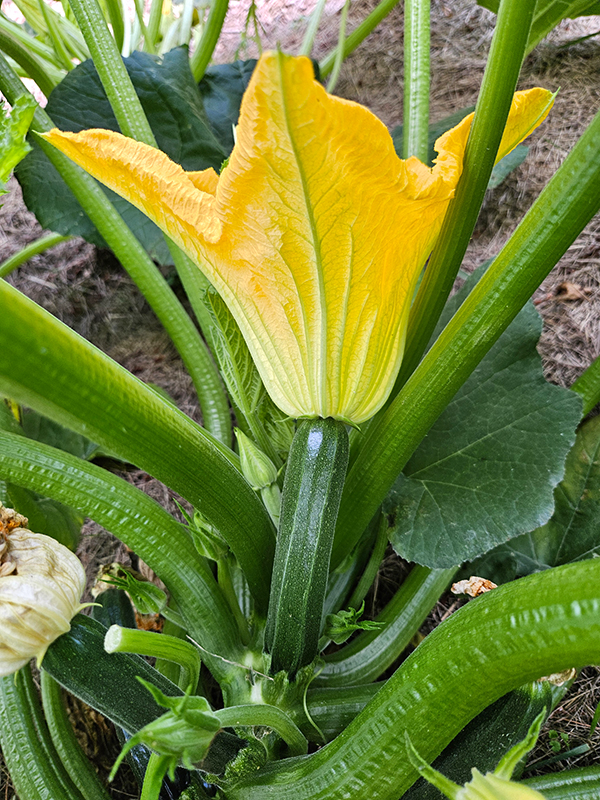
Watch For Success – Hand-Pollinating Zucchini
Now the only thing left to do is sit back and watch the zucchini or squash plants to see if your hand-pollinating worked. If it did, the swelling behind the female flower will continue to grow. The blossom might shrivel up and die, but the fruit will stay a nice, even color and shape as it fills out and grows.
Occasionally, the hand-pollinating doesn’t work, and the zucchini or squash fruit dies. If you see the fruit start to change color (most often a yellowing or graying that starts at the blossom end), then the pollination didn’t succeed.
Not to worry, because most zucchini and squash plants produce multiple blooms throughout the growing season. Give the hand-pollinating another shot and try again. Before long, I’m sure you’ll be swimming in zucchini and other squash fruit!
Until next time, thanks for stopping by!
– Chelsea
*This post may contain affiliate links. These are products I have used personally and highly recommend. As an Amazon Associate, I may earn a small commission from qualifying purchases if you purchase items through my links. These links and the ads on this page help to support my family and our semi homestead, so Thank You!
Discover more from Semi Homestead Life
Subscribe to get the latest posts sent to your email.