
You planted the garlic cloves last fall and covered the soil with mulch. You waited patiently all winter long until the plants sprouted and continued to grow as the weather heated up. Now that your garlic plants are strong and mature, how do you really know when it is ready for harvesting?
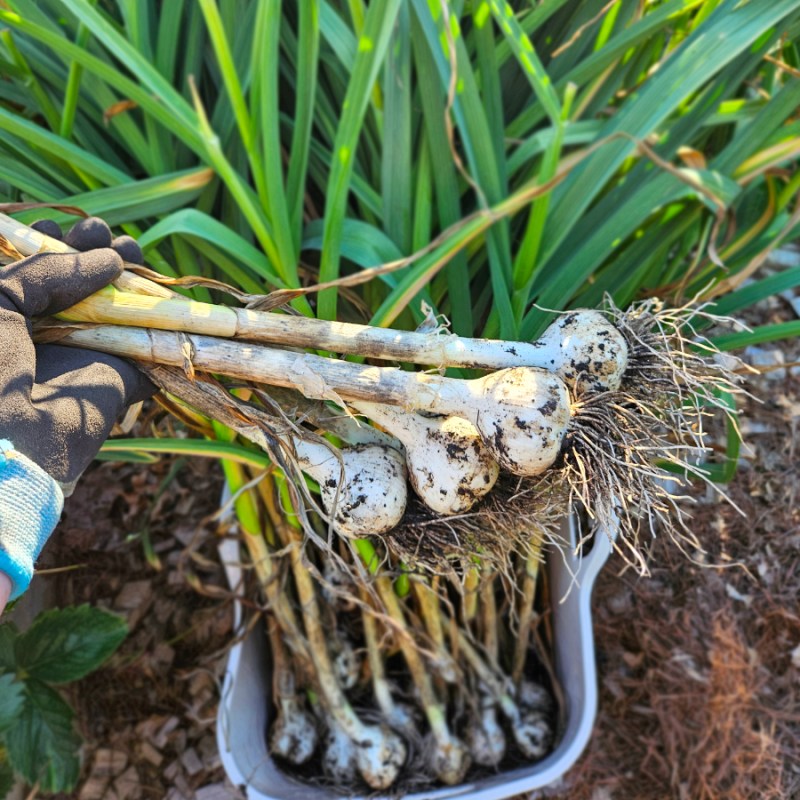
Harvesting garlic too early can result in less than ideal results, which is extremely frustrating when you’ve put in so much work up to this point. Not only will your garlic bulbs be small and not filled out yet, but premature garlic has a very poor storage life.
On the flip side, harvest your garlic too late, and the papery wrapper that covers the bulbs can start to rot away and result in poor storage as well. Bulbs can also split, dry out, and be more susceptible to diseases.
So when exactly should you harvest your garlic? What signs can you look for or be aware of? I’ll answer all those questions and more in this quick guide, as well as provide you with multiple supporting articles for a deep dive into growing garlic.
Loosely Go By Dates
Garlic should be harvested around 6 to 8 months after planting. For Growing Zones 8 to 10, this is usually around late May to late June. For Growing Zones 5 to 7, this is around late June to Mid-July. (This includes my area location here in Illinois.) For colder climates in Zones 3 to 5, garlic is usually ready around late July to early August. (Visit the USDA Plant Hardiness Zone to learn what your growing zone is if you aren’t sure.)
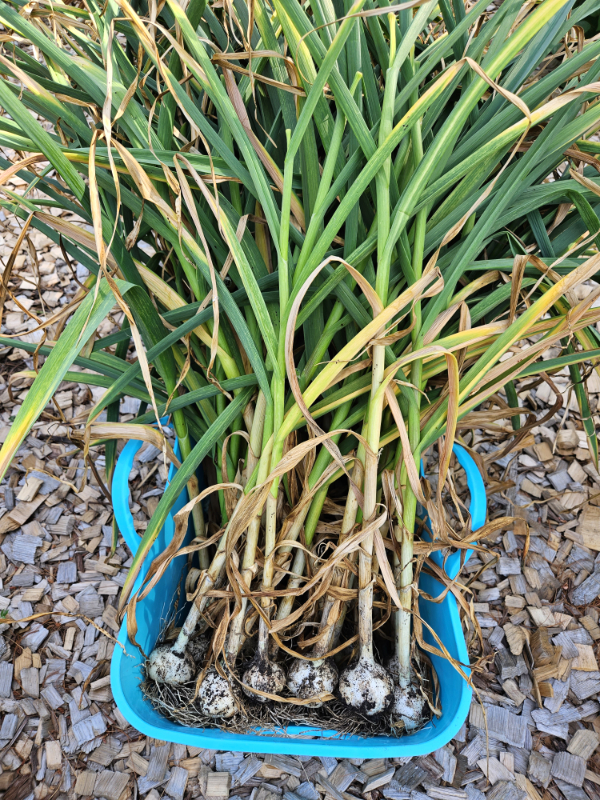
While I’d like to give you an exact date of when you can harvest your garlic, I can’t. A lot of it depends on the weather, your growing location, when you planted the cloves, when they sprouted, and so forth.
For example, here are the dates for the last five years of when I have planted my garlic, started harvesting the scapes, and then the bulbs. It might give you a bit of an idea of what you can expect, especially if you are also in Zone 5.
- 2022: Planted Oct 18 – Started harvesting scapes June 16 – Harvested bulbs July 14
- 2023: Planted Oct 10 – Harvested scapes June 2 – Harvested bulbs June 29
- 2024: Planted Oct 6 – Harvested scapes May 30 – Harvested bulbs June 29
- 2025: Planted Oct 11 – Harvested scapes June 3 – Harvested bulbs July 5
- 2026: Planted Oct 20 – Harvested scapes June 1 – Haven’t harvested bulbs as of the date I published this article.
So while the date might give you a bit of an idea of when to harvest, it isn’t the best surefire way to know for sure. Instead, you need to go by the look of the plant and use that as your guide as opposed to a set date.
Look At The Plant’s Leaves
While most crops have a set “Days to Maturity” you can use to know when your plants are ready for harvesting, garlic isn’t that way. Instead, the best way to know when your garlic is ready to harvest is to look at the plant.

If you look at a garlic plant, you will see a long stalk that is made up of multiple leaves. These leaves come away from the plant at different heights. Each leaf represents one layer of the papery skin that protects the garlic bulb.
As summer goes along, the leaves will start to turn brown and dry up. This happens starting with the lowest leaves and works its way up the plant.
Please note that I am not talking about just the tips of the leaves. Often, the tips will start to dry out and turn brown due to heat or lack of moisture. Instead, the entire leaf should be brown and dying.
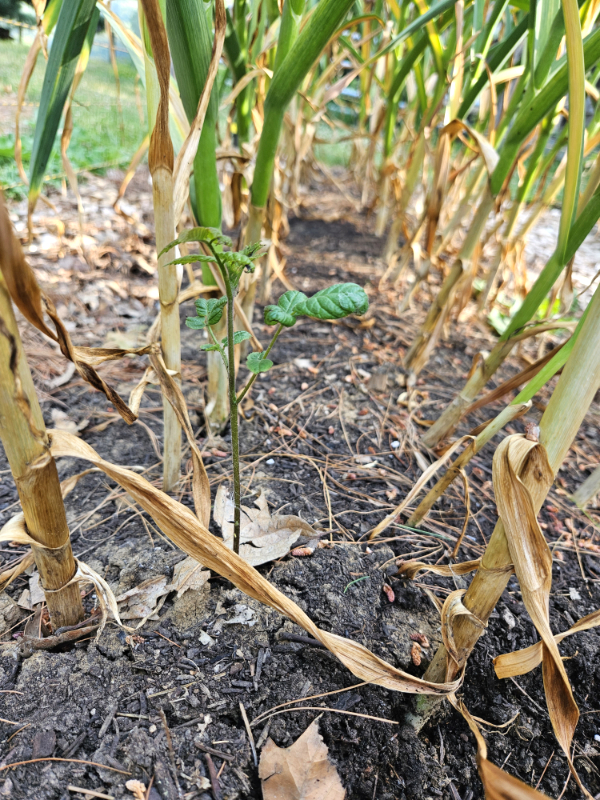
You can see in the above left photo that just two leaves have dried out. Hold off on harvesting at this stage and give the garlic another week or so. In the right photo, however, at least three full leaves are dry and brown. These garlic plants are ready for harvesting. (Please excuse the random green plant growing in my garlic that year!)
Once you see 3 to 4 leaves fully brown and dried up, it’s time to harvest. This should leave you with around 4 to 6 leaves still nice and green. Another way to look at it is when the plant is 1/3 dry. This is the single best indicator to use to let you know your garlic is ready for harvesting.
Hardneck Garlic Scapes
You can grow either hardneck or softneck garlic varieties. Here in the Midwest, I grow only hardneck garlic. It requires a period of cold stratification and grows best in Northern locations. Softneck is most often grown in the South.

If you grow hardneck garlic, you have an additional clue as to when it is about ready to harvest. Around late spring or early summer (usually in May or June), hardneck garlic produces these long flower stalks called scapes. As the scapes start to curl around and make a circle, the scapes should be removed.
About 3 to 4 weeks after you remove the scapes, the garlic is ready for harvesting. Still use the look of the leaves as your final indicator, but the scapes at least give you a bit of a heads-up that harvest time is right around the corner.
Side Note: If you leave scapes on, they will eventually turn into flowers. These flowers take away energy and resources from the plant that should go toward maturing bulbs instead. So removing them is important to have a good harvest.
The Issues With Harvesting Garlic At The Wrong Time
Harvesting Garlic Too Early
There are many issues that can occur if you harvest garlic too early. The first is that the bulbs and therefore the cloves will be underdeveloped.
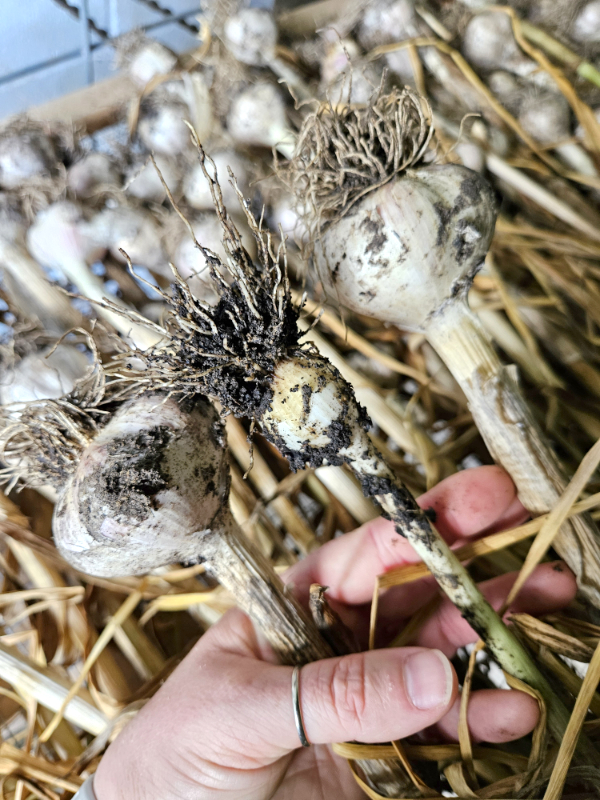
This will result in small cloves or none at all. Instead of having multiple cloves per bulb, you might end up with a single chunk.
Another issue is that the garlic will have a short shelf life. When garlic is properly cured and stored, the bulbs can last for several months after harvesting. In order to do this, the bulbs need to stay protected by their papery skins. The papery skin of immature bulbs is often too thin and can be damaged easily. This can result in the bulbs shriveling, rotting, and molding.
Even though immature garlic can’t be stored as long as bulbs that are ready for harvesting, you can still use them. After harvesting, use or freeze the garlic as soon as possible to prevent spoilage.
I like to mince a bunch of garlic at one time and then freeze it in one-tablespoon silicone freezer molds (Product Link). That way, I can easily pop one out when I need to use it for recipes without all of the extra prep work. At the same time, I don’t have to worry about spoilage thanks to the freezer.
Harvesting Garlic Too Late
While harvesting your garlic early results in small bulbs, harvesting garlic too late has its own set of problems. As the bulbs age, the papery skin that is meant to protect the cloves starts to break down. This leaves the cloves exposed to all sorts of diseases, pests, and any mold or bacteria in the soil.
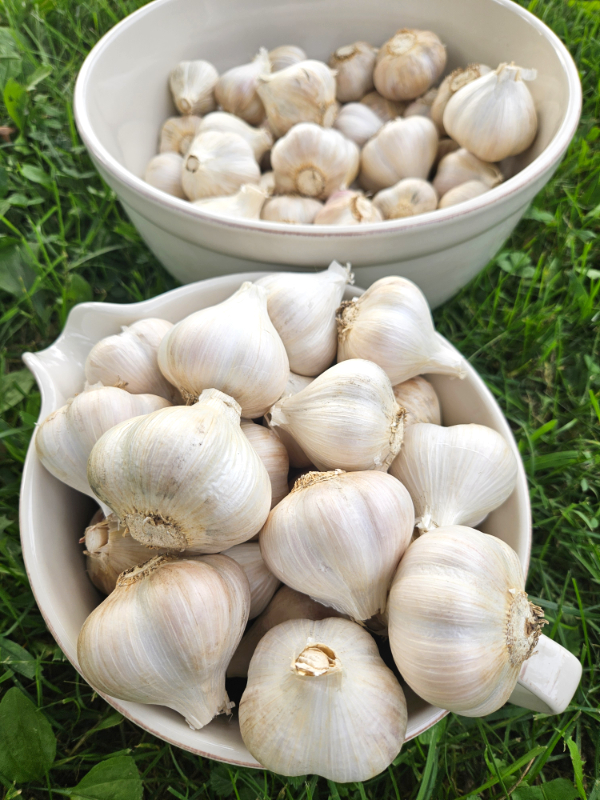
To make matters worse, the cloves themselves start to expand and grow. This can cause the broken-down skins to split and crack as the garlic swells. Once the papery skin is damaged, long-term storage becomes an issue, and the cloves start to dry out or rot.
If the garlic is left in the ground for too long, the cloves start to separate, create their own roots, and sprout. The green stalks can also start to rot or detach completely, making harvesting an issue.
Just like immature garlic, use up or freeze any late-harvested garlic as soon as possible. Be sure to check each clove over closely for mold or other issues and discard any with problems.
Additional Tips
I have a few articles specifically written about growing garlic that I will link here if you want more in-depth information. There are some very important tips to keep in mind, especially now that you know exactly when your garlic is ready for harvesting.
- “Hardneck And Softneck Garlic – Which Type Should You Grow?”
- “Planting Garlic In The Fall For A Huge Summer Harvest”
- “How To Harvest And Cure Garlic For Long-Term Storage”
- “Freezing Sprouted Garlic For Long-Term Storage And Easy Use”
Until next time, thanks for stopping by!
– Chelsea
*This post may contain affiliate links. These are products I have used personally and highly recommend. As an Amazon Associate, I may earn a small commission from qualifying purchases if you purchase items through my links. These links and the ads on this page help to support my family and our semi homestead, so Thank You!
Discover more from Semi Homestead Life
Subscribe to get the latest posts sent to your email.