
One of the best free natural resources to use in your garden is dead leaves, and I’ve got 3 great ways to use them this fall! That’s right, those crunchy colorful leaves can help to not only protect your garden plants but also help power your soil as well!
Some people might consider fall leaves to be quite a headache. They pile up in the corner of your home and create what can seem like an endless chore of raking and burning or cramming into compost bags.

However, all of those fallen leaves can be a big asset for your garden space. In fact, they can help protect your vegetable garden, raised beds, flowerbeds, and so much more. At the same time, the leaves will help to power your soil as they break down.
The best part of all is that leaves are extremely abundant this time of year, especially if you have mature trees on your property. Oh, and did I mention they are free?! Even if you don’t have trees nearby, you usually have friends or neighbors that would be more than happy to share their leaves with you.
Check out how we use leaves to power and protect our semi homestead and why you might consider using them around your property as well.
3 Ways To Use Fall Leaves Around Your Home & Some Quick Tips
#1: Mulch To Protect “Naked” Soil
Most of the time during the fall, we plant a cover crop to protect our bare soil. However, there are some cases when the cover crop just doesn’t work.

Here in Illinois, we typically have to plant our cover crop in the first few weeks of October. This gives it plenty of time to germinate and start filling in before the ground freezes.
Well, when we go to plant the cover crop, we might still have a few crops in the garden that we haven’t pulled yet when we cleared out most of the garden. (Like if I am trying to hang on to my favorite tomato plant for way too long!) Because of this, we don’t always get those growing rows planted with the cover crop.
That’s not a huge issue, but once those late crops are eventually pulled, that leaves behind bare soil. If you’ve read any of my other articles, then you know that bare soil is a big no-no for a huge variety of reasons.
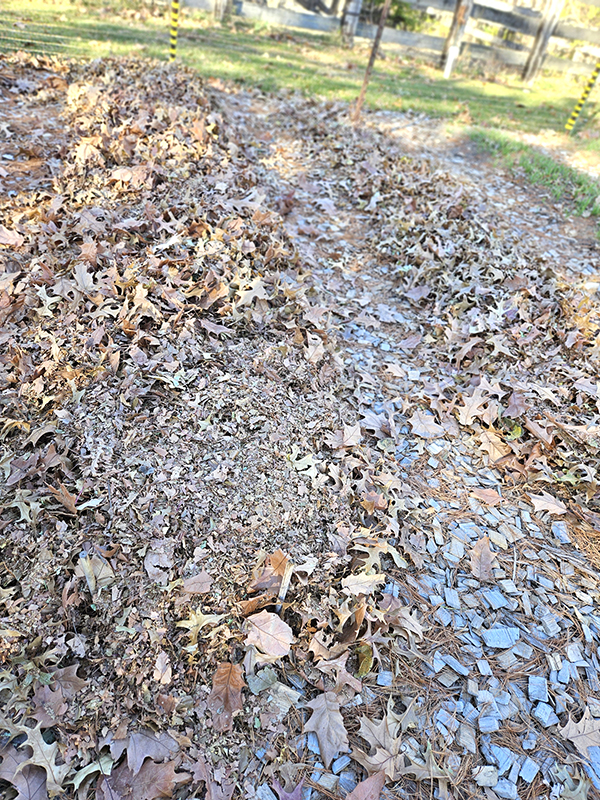
So instead of leaving the soil bare (or naked as I like to say), we cover it with shredded leaves. The leaves will act like a soil protectant, preventing weed seeds from landing and laying dormant over winter. In addition, as the leaves break down in the spring, they will add loads of organic matter to the soil, improving drainage and overall soil composition.
#2: Protect Plants Over Winter – 3 Ways To Use Fall Leaves
During the late fall and winter, we often have a few of next year’s annual crops already in the ground. Most of these crops have to be planted in early fall in order to get the required amount of “cold hours” over winter. One such crop is hardneck garlic.
We have to plant our hardneck garlic cloves about mid-October. Since the cloves are already in the soil, we don’t want to also plant a cover crop in the same space because it might steal nutrients and resources the garlic needs.
However, we still need to protect not only the soil but also those tender cloves from the constant thawing and freezing that comes along with the Midwest winters. We can do that by adding a thick layer of shredded leaves to act like a mulch over the garlic.

You can also add leaves to protect your perennials as well. Pile up the leaves around the base of rose bushes, blueberry plants, and other shrubs and perennial flowers. Pile them on top of the soil where your asparagus and strawberry plants are growing as well.
Just make sure that the leaves are a good 4 to 6 inches deep. If you want to help keep the leaves in place, lay down a piece of fencing or a few fence posts on top of the piles. Where we live, it can get really windy in our garden location so doing this helps keep the leaves where we want them. Watering the shredded leaves can temporarily help as well.
#3 Add Fall Leaves To Your Compost – 3 Ways To Use Fall Leaves
A great way to “get rid” of a lot of shredded leaves at once is to add them to your home compost pile. Dead leaves are full of calcium, phosphorus, potassium, magnesium, and other trace minerals.
Shredded dead leaves are considered to be a “brown” compost material. This means they are a carbon-rich material. Carbon-based products help to add oxygen to compost piles and allow them to easily break down. At the same time, the leaves will provide loads of organic matter to the compost, helping improve the overall composition of the soil.
Just make sure that if you add quite a lot of fall leaves to your pile you also include green items to balance it out. That can include grass clippings, table scraps, plant matter, etc.

Turn the compost pile at least weekly until the materials start to freeze. Start up again when spring rolls around and everything starts to thaw out. The finished compost can then be used in your garden to power and recharge the soil.
Bonus Tip: Shred The Leaves First – 3 Ways To Use Fall Leaves
When it comes to adding them to your garden, soil, or compost pile, it’s best to shred the leaves first. Whole leaves tend to create a fairly watertight seal when they are piled on top of one another. Sure weeds won’t be able to grow, but it also prevents oxygen, water, and light from getting to the soil as well. In most cases, that isn’t what we want.
In regards to composting, it also takes whole leaves a long time to break down and decompose. Shredded leaves, on the other hand, will break down a lot faster. This results in finished compost you can use much more quickly.
So, before you use the fall leaves, you need to shred them. Thankfully, there are several different ways you can do this without taking a ton of time or effort.
Different Ways To Shred Leaves
There are many ways that you can shred leaves. First, there’s the simple leaf blower method. Some leaf blowers have attachments that will allow you to suck up and shred leaves instead of blowing them around.
You can also use a push or riding mower to run over the leaves. While this doesn’t do the best job of breaking down the leaves evenly, a few passes will help to cut up most of the leaves. A bagger attachment on your mower will make the job even easier since you don’t need to rake the leaves afterward.
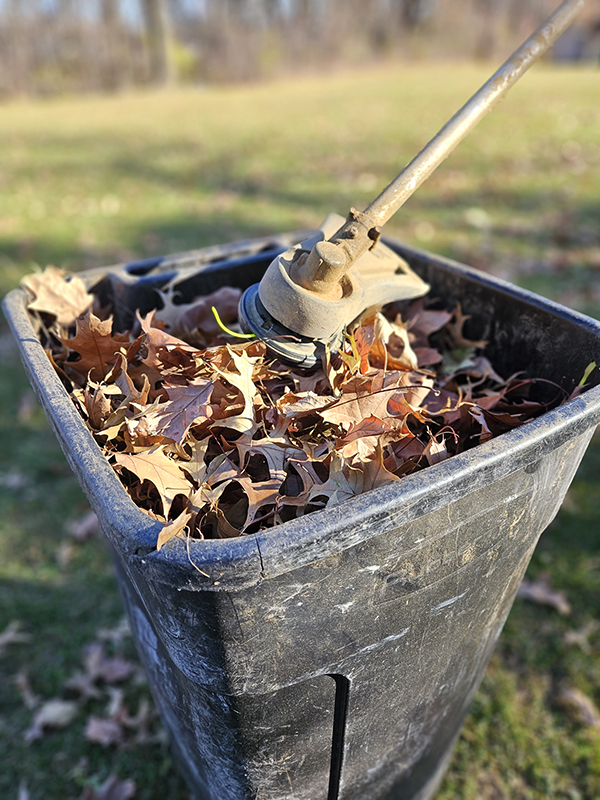
However, we like to use a little hack that we discovered a year or so ago (thanks to Reels or TikTok or one of those). That method involves no new special equipment, only your weed eater and a trash container. (Product Link: Echo String Trimmer)
You can read all about that method here as well as seed a video demonstration, “A New Way To Mulch Leaves Using A Weed Eater & A Trash Can!“
Another Bonus Tip: Avoid Some Tree Leaves
While most tree leaves are completely fine to use around your garden, there are a few that should be avoided. The first one that tops that list is those from black walnut trees. Black locust, hickory, black cherry, and red oak are other leaves to steer clear of for garden use.

If you are like us and have black walnut trees on your property, just choose other leaves for use around your garden and flowerbeds. Adding them can cause more harm than good. See my article, “Black Walnut Trees & Vegetable Gardens – What To Know & Grow“, for more information.
Hopefully, you will choose to do more with your fall leaves this year by putting them to use in your garden!
Until next time, thanks for stopping by!
– Chelsea
*This post may contain affiliate links. These are products I have used personally and highly recommend. As an Amazon Associate, I may earn a small commission from qualifying purchases if you purchase items through my links. These links and the ads on this page help to support my family and our semi homestead, so Thank You!
Discover more from Semi Homestead Life
Subscribe to get the latest posts sent to your email.