
When it comes to gardening and growing vegetables, one of the most common pests that seems to appear almost out of nowhere is aphids. Thankfully, aphids are pretty easy to prevent and treat if you take a few steps to protect your garden this growing season.
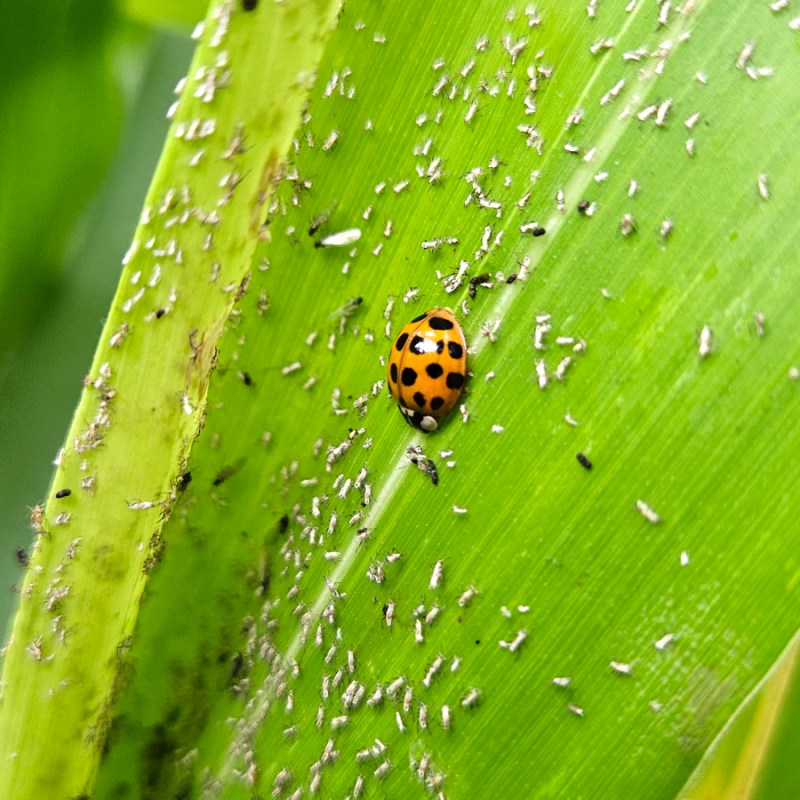
Aphids are small, soft-bodied insects that feed by sucking the sap from host plants like sweet corn, sunflowers, roses, tomatoes, fruit trees, lettuces, and more. These teeny tiny insects might be hard to see due to their small size, but they can really wreak havoc on your plants in no time at all!
While a few of these tiny sap-sucking insects aren’t usually a cause for concern, a small infestation can turn into a BIG problem if left unchecked thanks to their rapid reproduction rates. Large infestations can quickly weaken plants, reduce harvests, damage blooms, and turn your hard work into piles of limp and wilted foliage.
Not only that, but having an infestation this year also gives the pests a chance to overwinter and cause problems with next year’s gardening season as well. In this guide, I’ll walk you through how to prevent and treat even the largest infestations.
How To Spot Aphid Damage
While the pests themselves can be a bit tricky to see, their damage usually isn’t. I go into more detail about how to identify and spot aphids in my article, “How To Identify Aphids & The Damage They Cause To Your Garden”, but here are a few quick things to look out for:
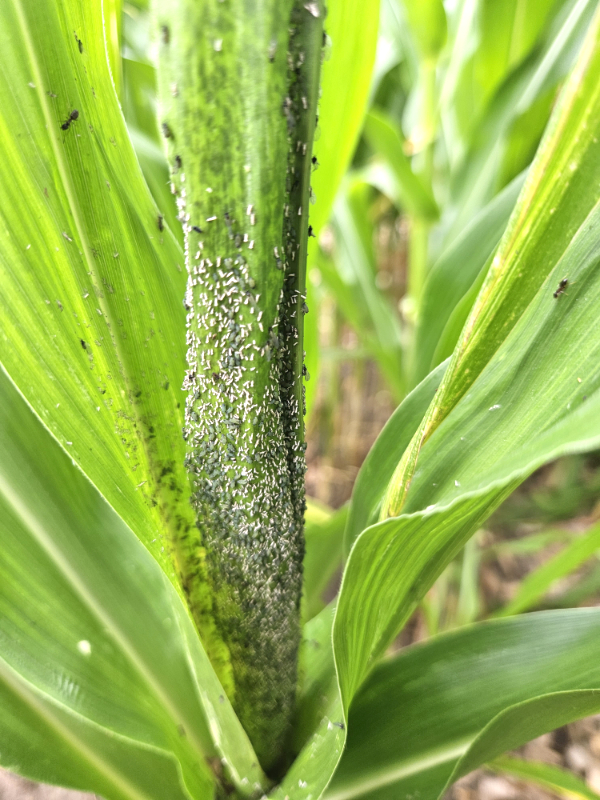
- Curled, misshapened, stunted, or yellowing leaves
- Deformed fruit or flowers
- Growths called “galls” on the leaves or roots of damaged plants
- The heightened appearance of ants on plants
- Black sooty mold fungal growth
Aphids can live and feed on all parts of a plant, including the stems, leaves, buds, flowers, fruit, and roots. They especially like tender, new growth.
They can appear on many different host plants, but especially love beans, cabbage, corn, cucumbers, lettuces, tomatoes, sunflowers, nasturtiums, mustards, fruit trees, roses, dahlias, and zinnias. There are many different aphid species in the United States as well as worldwide, and most feed on multiple host plants.
If you spot any of the issues above, look carefully on the undersides of the leaves. That is most often where aphids will be hanging out in groups containing both nymphs and adults.
Ways To Prevent Aphids – Prevent & Treat Aphids
When planting your garden each year, practice crop rotation. Don’t grow the same crops in the same exact space year after year. This is only asking for disease and pest issues to occur.
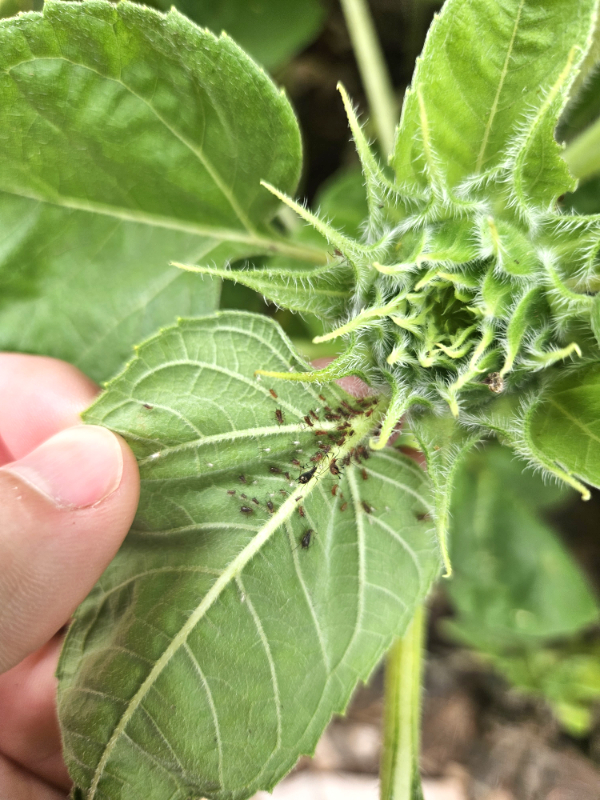
In addition to moving your plants around, also consider planting trap crops. These are plants that are more tempting to pests. While it won’t keep aphids out of your garden, it will allow your “wanted” plants to grow while the less wanted plants feed the aphids. I’ve had great success using nasturtiums and sunflowers as trap crops, but mustard greens and calendula are also said to work on some aphid species.
Another important way to help prevent aphids is to remove any plant matter after the growing season is up in the fall. This removes any eggs that might be overwintering on your plants. It is an extremely important gardening chore to do if you have an aphid issue during the current growing season.
Lastly, work to keep your plants healthy. A stressed-out plant that is struggling to survive is much more susceptible to diseases, pests, and damage. Keep your garden watered properly, remove weeds, and encourage strong biodiversity in your garden when possible.
Treating Aphids When Gardening
Even with all of the best efforts to prevent aphids in your garden, sometimes you still end up with an infestation that you need to treat. Thankfully, there are some really easy ways to take care of an infestation.

The first way to help stop aphids is to catch any problems early. Walk around your garden and check your plants often. That way, if you spot any issues, you can work to keep an eye on them and fix them before they get out of hand. A smaller infestation is much easier to treat than one that has gotten out of hand.
While checking your plants, if you spot any of the plant issues I mentioned above, look at the underside of the leaf. Most likely, if you have aphid issues, they will be hanging out upside down in a group.
If you spot a few aphids and the problem isn’t out of control, I try to take a “watch and see” approach first. Smaller infestations can be managed by natural predators like ladybugs. So if you see natural predators nearby, keep an eye on the area. If it gets too out of hand, it’s time to step in and give the predators a helping hand.
Ways To Remove Aphids Naturally
Most of these methods below will work. However, you might have to repeat the process a few times or use a combination of them. This is especially true for larger infestations.
Use Water – Aphids can easily be removed by a simple blast of water. It’s the simplest, natural method for removing aphids. Once the wingless aphids hit the ground, they usually can’t make it back up to the host plant. Use a garden hose or a handheld sprayer and a strong stream of water to dislodge the aphids. Just make sure that the water spray isn’t so strong it tears the plant’s foliage.
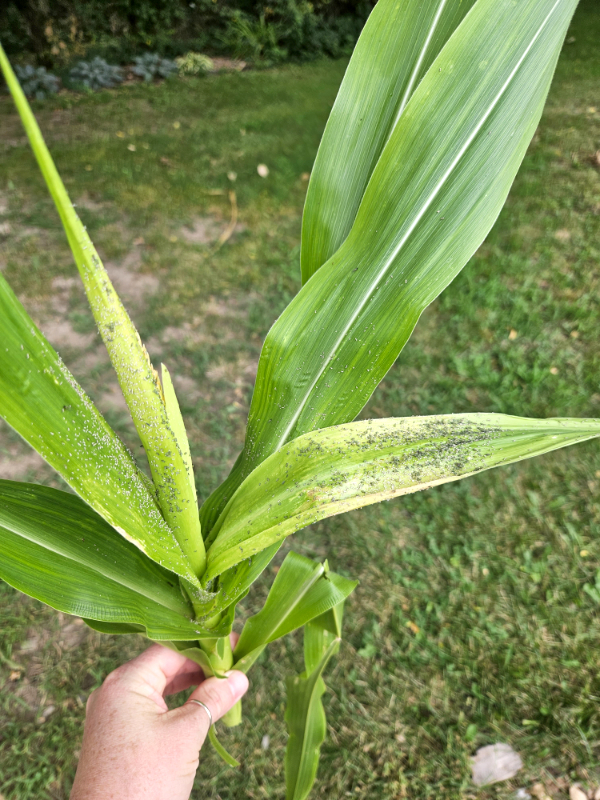
Removal By Hand – This process can take a bit longer, but you can remove aphids by hand. This works best for smaller infestations. As a quick tip, use a piece of packing tape to remove the bugs so they can’t escape. (I also use this tip for removing squash bug eggs.) Again, be careful not to tear or rip the plant’s foliage.
Remove Damaged Plant Matter – For smaller infestations, prune the problem leaves from the plant. If an infestation is really bad, sometimes the best method is removing the entire host plant. I’ve had to do this with a few sweet corn plants.
Encourage Natural Predators – There are many natural predators for aphids. One of the most common ones is ladybugs. Other examples are hoverfly larvae, lacewing larvae, and parasitic wasps. Work to encourage these beneficial insects to visit your garden.
Companion Planting – Plant crops that give off a strong odor to deter aphids. While this method comes with a bit of mixed results, it might still be worth trying. Try plants like catnip, chives, garlic, marigolds, and mint.
Products To Try
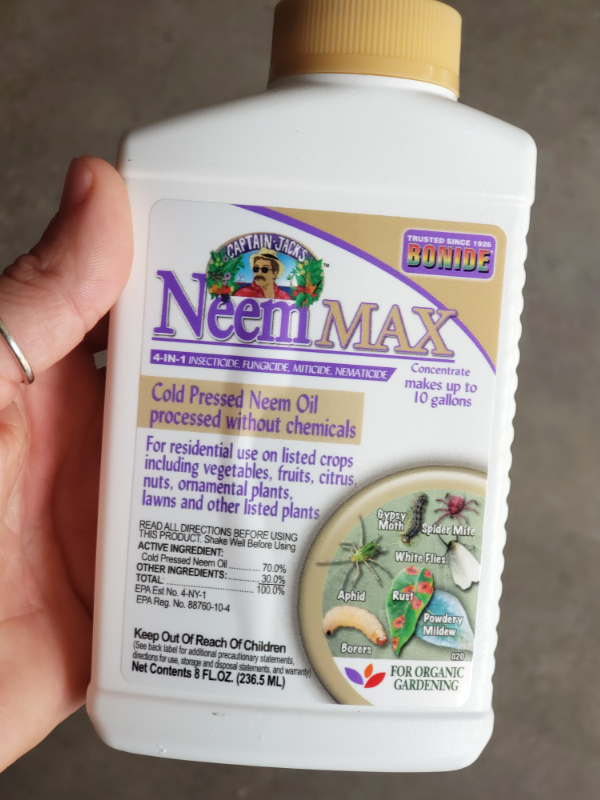
Neem Oil – If the above methods don’t do the trick, I usually try neem oil as my next route to prevent and treat aphids in my garden. Neem oil is certified organic and is derived from the seeds of the neem tree. Always follow package instructions to keep beneficial insects safe.
Insecticidal Soaps – These products are also certified organic, break down quickly, and are effective treatments for aphids. You can find commercial products as well as homemade recipes out there. Again, be sure to follow the directions so you don’t wind up hurting beneficial insects as well as the aphids.
Synthetic Sprays – This should always be your very last method for removing aphids in your garden. However, if an infestation is so bad, you may not have any other option. Just know that most of these products have specific directions on how to use them “safely”. Even with proper use, you may still wind up hurting the beneficial bugs in your garden. There might also be a delay time on when you can harvest and consume any produce after being sprayed. I know some people are very passionate about not using harsh chemicals, so you do you.
Your Best Defense – Prevent & Treat Aphids
Overall, your best defense against aphids is having a healthy and thriving garden. That doesn’t mean that your garden won’t get pests from time to time, but it encourages and promotes natural ways of preventing unwanted pests instead of relying on chemical sprays and your intervention.
For example, if you see a small aphid infestation but also see multiple ladybugs in the same space, take the “watch and wait” approach. Keep checking those plants, but allow Mother Nature to do her thing and see if the ladybugs can keep the aphids from getting out of hand.
Check your garden frequently, encourage natural remedies (like planting trap crops and using crop rotation), and don’t freak out if you do see a few pests or insects. As a seasoned gardener, I can almost guarantee you that you will come across pests and problems each and every year. Learn from them, treat them if needed, and just know that there’s always next year!
Until next time, thanks for stopping by!
– Chelsea
*This post may contain affiliate links. These are products I have used personally and highly recommend. As an Amazon Associate, I may earn a small commission from qualifying purchases if you purchase items through my links. These links and the ads on this page help to support my family and our semi homestead, so Thank You!
Discover more from Semi Homestead Life
Subscribe to get the latest posts sent to your email.