
If you are a beginner gardener, trying to read and understand seed packet information can be very overwhelming and intimidating. All of those terms, numbers, dates, and more might leave you putting the packet right back on the shelf instead of being excited to start growing.
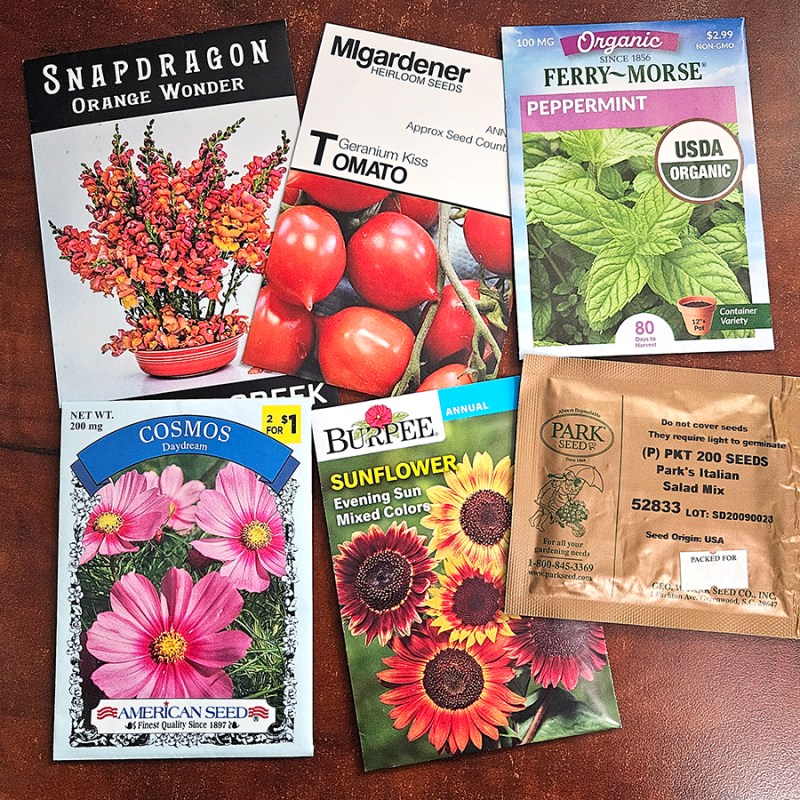
Thankfully, most of the information provided on seed packets is the same across the board for each company, no matter how it is written or styled. So once you get the hang of the basic terms and information, you can then decide which plant is the best for you and your garden – and grow it with confidence!
Growing plants from seeds is a great way to open up a whole wide world of possibilities. From different flavors to colors to blooms, growing from seeds makes it possible for you to personalize and expand your gardening space.
Not all of the information listed below will be on each seed packet. It will vary depending on the seed company as well as the type of crop the seeds are for.
Breaking Down The Seed Packet Cover
Each seed packet contains identifying information about the seeds or plant variety. You can find this information on the front of the packets.
The Photo: There is usually a photo or drawing of the specific plant you can expect to grow if you plant the seeds within the packet. It will show color, size, and other identifying features of the plant.
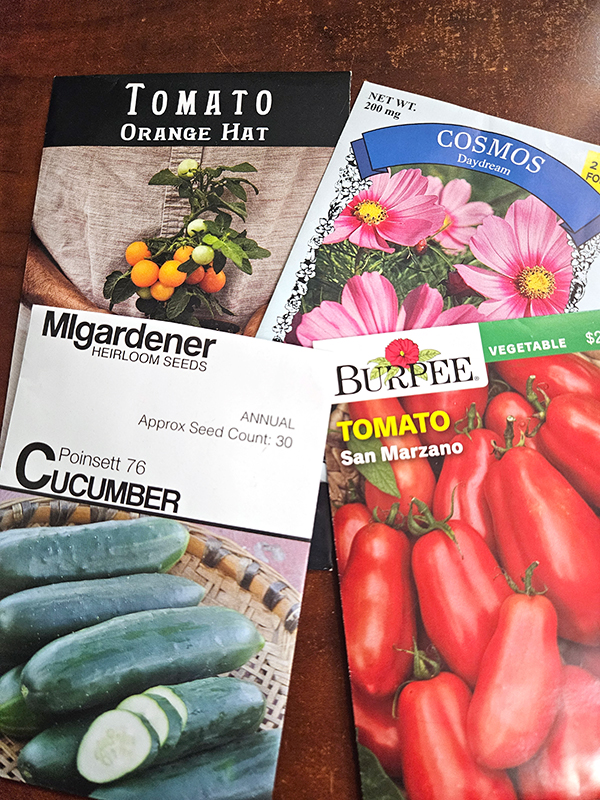
Crop and Variety: These two names help you identify what seeds are within the packet. It’s probably the most important information on the packet. (Otherwise, how would you know what you were purchasing?)
First up is the crop. This is usually found in big and bold letters on the front of the packet. The crop is the broad seed category, like tomato, carrot, sunflower, snapdragon, and Peppermint.
Then you will have the specific variety of that crop, usually in a smaller font nearby. There are hundreds of different sizes, flavors, colors, etc. of most crops, so the specific variety is very important to know. (Some crops don’t have a variety, like Peppermint. Only the crop name is on the packet.)
Seed Count: This tells the gardener how many seeds are inside the packet. Sometimes this is listed as a specific number, or it is listed as a weight (usually in grams or milligrams). The seed count can help you decide whether you need to purchase four packets of seeds or just one.
Annual or Perennial: If the plant is an annual, then it is only intended to grow and survive for one growing season. If it is a perennial, then it is intended to come back each year. Some are even Biennial, which means they grow for two years.
Reading The Plant Description Paragraphs
On the back of the seed packet is usually one or two little paragraphs of information. These paragraphs include information the seed company wants you to know about the seeds, the plants, or anything else they find important.
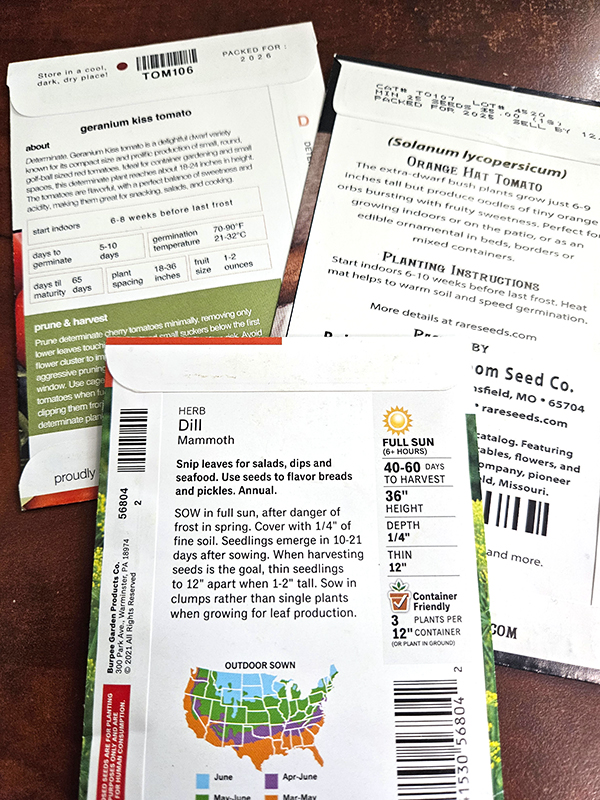
The information can include when to start seeds indoors, planting instructions, how the plant grows, if it needs trellising, the color or size of the fruit/vegetable/blooms, whether it is good for containers, if parts are edible, etc. It can also include whether the plant has disease resistance, when to thin seedlings, and what type of yields to expect (i.e., how many it can produce).
Read this information to get to know the plant a bit more and compare one variety to another. It can help you narrow down which crop works best for your particular garden and harvesting goals.
Understanding Planting & Growing Chart
These items are usually listed on the back of the seed packet in some sort of list or chart. They are simple facts that you can refer to quickly at a glance. All of these will help you know exactly how and where to plant the seeds for success. The terminology can vary slightly, so I included a few different ways it might be written.
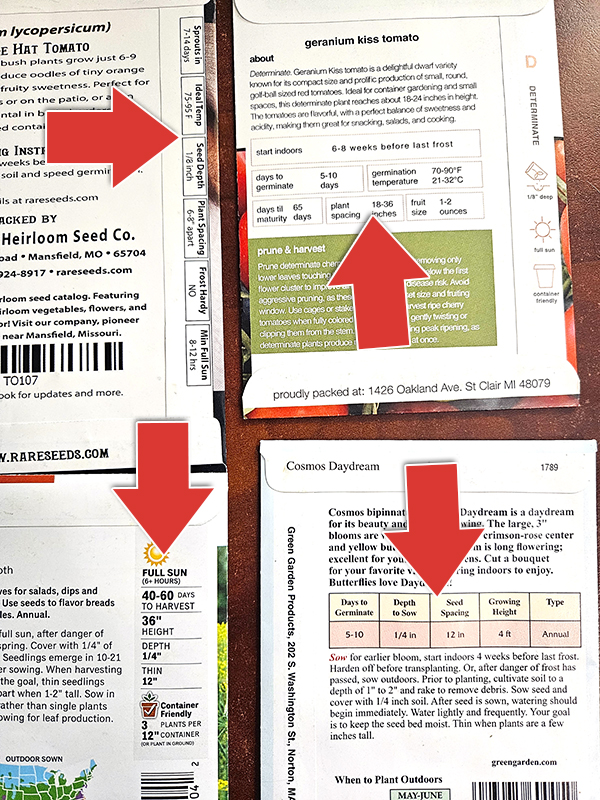
Seed Planting & Germination Information
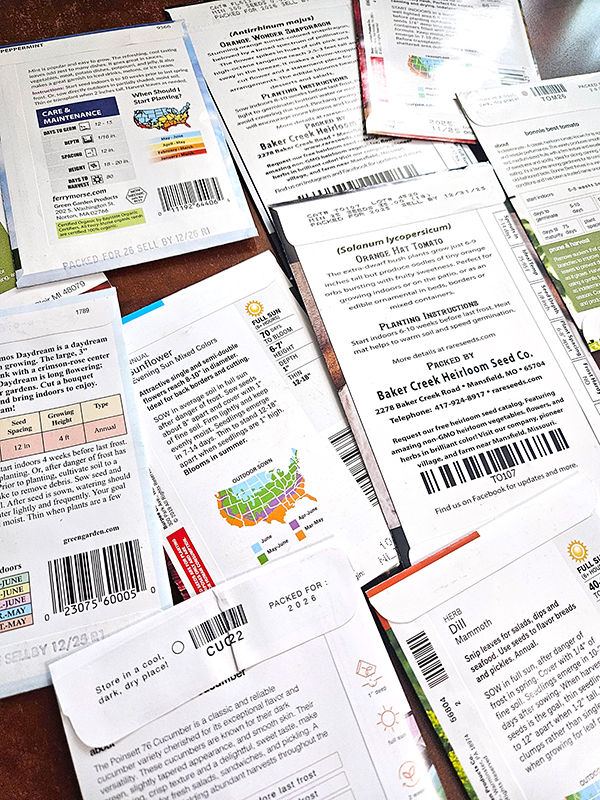
Depth: This is how deep you want to plant the seeds. Some seeds require sunlight in order to germinate and are usually listed as 1/8″ or 1/16″ deep if that’s the case. You need to plant other seeds deeply in the soil.
Plant Spacing/Space/Thin: This refers to the ideal spacing the seeds (and thus the plants) should be apart. I usually plant seeds closer together and then thin the plants after they are a few inches tall to achieve the proper spacing. (Plants don’t always germinate at 100%.) Also, I don’t always follow recommended plant spacing to a T. It’s a good starting point, but you can also vary it depending on your garden space and your growing goals.
Days To Germinate/Sprouts In: This is the timeframe it takes from when you plant the seed in the soil to when it germinates or pops out of the ground. The Days to Germinate information is especially important if you are starting seeds indoors.
Germination Temperature/Ideal Temp: Some seeds require a specific temperature in order to germinate, so that might be listed as well. If the soil is too cold, the seeds won’t be able to germinate properly.
Plant Growth Information
Height: This is how tall the plant will grow on average once it is fully mature. You can use this to decide where in your garden to plant a particular variety. For example, you don’t want to plant a tall vining tomato plant in front of a dwarf variety! You can also use it to determine if a plant needs trellising or not.
Sun Requirements: This is how much sun the plants require to flourish and produce. You need to plant some crops in a location that receives full sun (which is more than 6+ hours of direct sunlight). Some also grow well in partial sun/shade (4 to 6 hours of direct sunlight).
Days To Harvest/Bloom/Maturity: This is the length of time on average from when you plant the seeds into the soil until the plants are considered “mature” and start to produce fruit/vegetables/blooms.
What Is The Hardiness Zone Map?
A lot of seed companies include a small map of the United States on the back of the packet. This is the Hardiness Zone or Growing Zone Map. The map shows you when to plant the seeds outside or move the transplants into your garden.
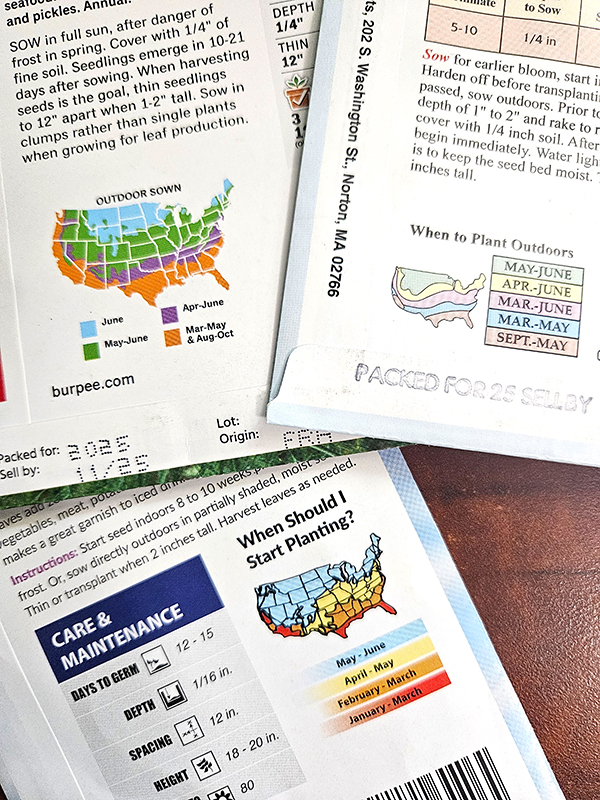
The map is broken down into sections, usually shown by different colors. Each of the colors will have a key next to the map indicating what months you should get your seeds or plants into the ground.
If the seeds are from a cold-weather crop, it will tell you both the planting months for a spring/summer harvest and the months for a fall harvest. For example, you can plant Dill (an herb) in the far south in March through May for a spring harvest and/or in August through October for a fall harvest.
Explaining Heirloom, Hybrid, Non-GMO & Organic Labeling
These three terms are very important to some growers, and seed companies print them on the packets as often as possible if applicable. They can also be a hot-button topic that I am just going to briefly touch base on.
Herilooms are a type of open-pollinated plant. If you were to save the seeds from these plants, they would be true and produce identical copies of the parent plant. If your goal is to save seeds to grow the following year, then you need to plant open-pollinated/heirloom seeds. Typically, in order to be listed as an “heirloom,” the plant needs to have been around for 50 or more years. (This timeframe can vary based on the source.)
Besides open-pollinated plants, the other type of seed is a Hybrid. (You often find F-1, F-2, etc., written at the end of the seed variety). This is a seed variety that has been created by using traditional methods – crossing plants together that have different qualities but that are related. (I have WAY more information about this in my article, “How To Save Garden Seeds – Open-Pollinated Vs Hybrid Seeds”.)
Non-GMO simply means that the plant variety was produced using traditional methods, or it is an heirloom. GMO (Genetically Modified Organism) plants were engineered in a lab by combining genetic material from a non-related source (like bacteria, fungus, etc.) into another.
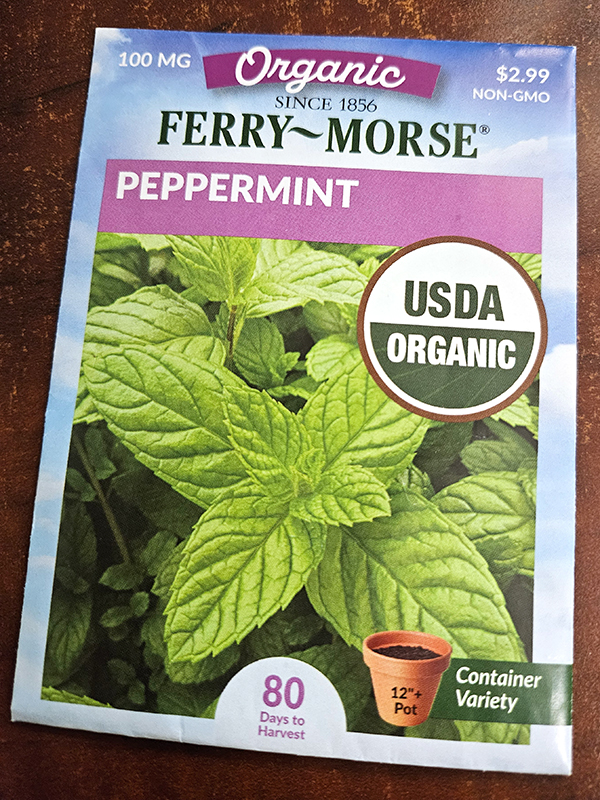
Organic means that the seeds came from a plant that was not treated with synthetic fertilizers or pesticides. Open-pollinated, hybrid, and GMO crops can all technically be grown organically. (Though GMO seeds cannot be listed as “certified organic” according to the USDA.)
What Is The Packaged Date?
There is a year stamped or printed on every single store-bought seed packet you come across. Most often, it simply says “Packed For” followed by a year. Some also include a specific “Sell By” date, usually the last day of the same year.

The “Packed For” year is the year that the seeds are being sold in stores. So if it’s currently 2026, the date on the packets in the stores should say 2026. That doesn’t mean the seeds were harvested that year. In order for companies to have seeds on sale in 2026, they have to be harvested from last year’s plants.
Unlike your milk or meat products, this date isn’t an expiration date. In fact, many seed varieties can last for multiple years if stored correctly. (You can learn about my seed storing tips in my article, “Storing Saved Seeds – Preserving Vegetable & Flower Seeds”.) So don’t toss those packets if you have extra seeds after planting this year!
Understanding Other Misc Seed Packet Information
Some seed companies include additional information on their packets. Here are a few examples of what you might find.
Determinant or Indeterminate: These two terms refer to how the plant grows and produces. Determinate plants are more compact and tend to produce all at once. Indeterminate plants are vining in nature and produce throughout the whole growing season.
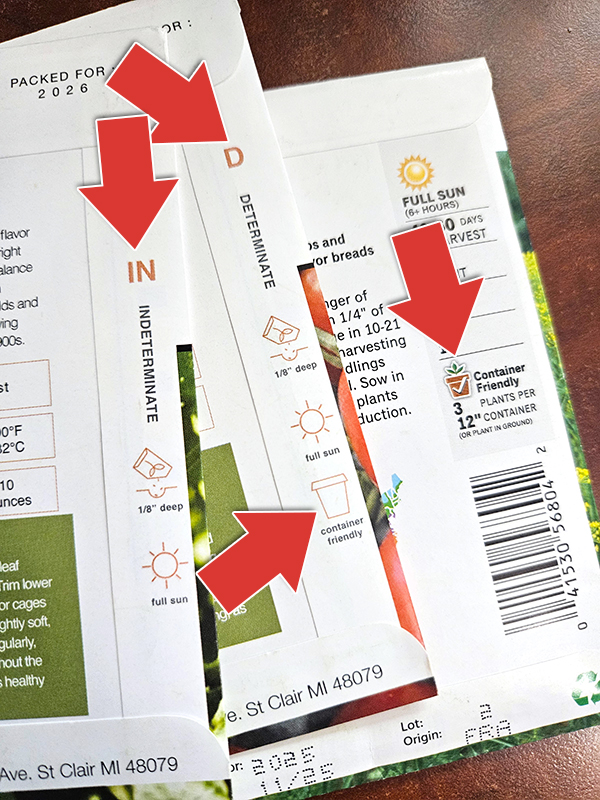
This is usually a term that makes people think of tomatoes. However, it can also apply to peppers, cucumbers, potatoes, eggplants, and some vining beans and peas. (I have a whole article dedicated to understanding these terms if you need more information: “Determinate And Indeterminate Tomatoes – All You Need To Know”.
Container Friendly: If the crop and variety is sutible for planting in containers, you can either find that in the Plant Information paragraph or in a separate area on the packet. Typically, these crops don’t require trellising and are great for smaller spaces.
Frost Hardy: This can tell you whether the plant can withstand light frosts or if either a late or early frost will kill the plant.
Lot or Origin Stamp: This info is more for the seed company to identify where or when the seeds came from. However, you can use it if you have issues with the seeds and need to contact the company.
Hopefully, you now have a bit more confidence in reading and understanding all the information printed on a seed packet.
Until next time, thanks for stopping by!
– Chelsea
*This post may contain affiliate links. These are products I have used personally and highly recommend. As an Amazon Associate, I may earn a small commission from qualifying purchases if you purchase items through my links. These links and the ads on this page help to support my family and our semi homestead, so Thank You!
Discover more from Semi Homestead Life
Subscribe to get the latest posts sent to your email.