
One day, your chickens provide you with an endless supply of freshly laid eggs. The next thing you know, you open the nesting boxes only to find them empty, aside from a feather or two. What gives? Why did your chickens stop laying eggs, and what, if anything, can you do about it?

If you are new to raising chickens, there is nothing more exciting than seeing those first tiny eggs from a new flock of hens, especially if you raised the birds from chicks! Those little pullet eggs get larger and larger until you are getting overrun with loads of eggs.
But what happens when that reliable egg laying stops? It can be a bit alarming to go from dozens of fresh eggs a day to nothing at all.
Before you start wondering if something is wrong with your flock, there are a few reasons why you might not be seeing eggs in your nesting boxes. The age of the hens, the number of daylight hours, whether the birds are going through a molt, and more can all affect egg-laying.
In this article, I put together a list of the nine most common reasons why your girls might be taking an egg-laying break. Some of the reasons are completely normal and part of the natural lifecycle of hens, while others might be a cause for concern and action.
9 Reasons Why Chickens Stop Laying Eggs
#1: Shorter Daylight Hours
As summer turns into fall, the number of daylight hours starts to dwindle. Instead of getting 14 to 16 hours of sunlight, you are now getting around 12. Once winter officially hits, those bright days are down to around 9 hours. (At least that’s the way it is here in Illinois.)
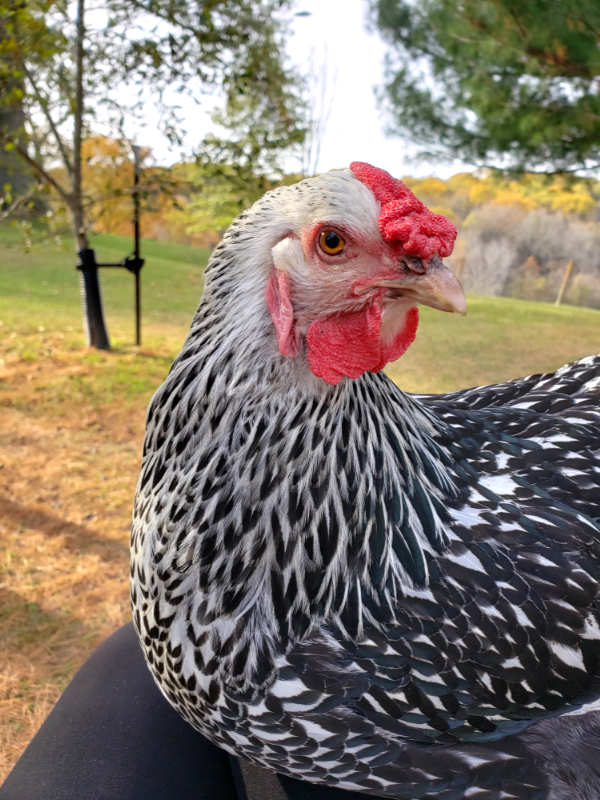
Why does this matter to chickens?
The amount of light a hen receives plays a part in their reproduction cycle. In order for a hen to lay eggs, they need to be exposed to around 14 hours of light each day. The more, the merrier to maintain consistent egg production. When the daylight hours are reduced, the hens slow down and eventually stop laying eggs. This naturally occurs during the fall and winter months.
You can help keep a hen laying throughout the fall and winter by providing a source of artificial light for your birds. When adding light, make sure to use bulbs that are approved for outdoor and dusty locations. Choose a bulb that has warm coloring as opposed to cool to better mimic sunlight. Keep the lights on for 14 to 16 hours each day, then turn them off to allow the birds to roost and sleep.
I personally don’t mind my girls getting what I consider to be a much-deserved egg-laying break during the colder months. (It also helps that I freeze a bunch of eggs during the late summer so I have plenty on hand for cooking and baking year-round!)
One Thing To Note:
Just like with human females, a hen is born with all the eggs already in her body that she will lay in her lifetime. Once she uses up all of those eggs, she is done.
So adding artificial lighting and causing her to lay year-round isn’t going to give you more eggs overall. You will still be getting the same amount from that hen; they will just get used up sooner in the hen’s lifecycle.
#2. Molting – Why Chickens Stop Laying Eggs
The shorter daylight hours also trigger most hens to molt. After chickens hit around 16 to 18 weeks old, they have what’s called an annual molt. They will continue to have one every year, usually during the fall months.
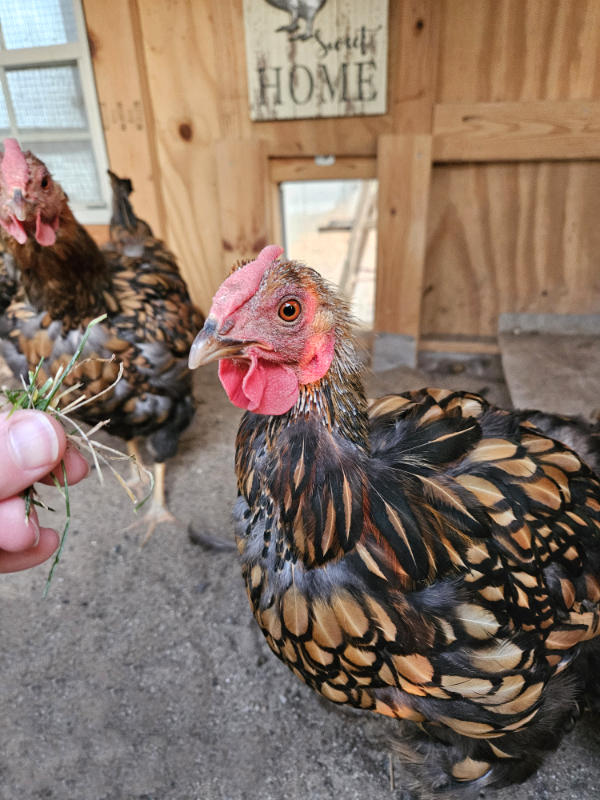
Molting is the process where the birds lose some or all of their feathers and new ones replace them. The process can take just a few weeks up to around 12 weeks, depending on the individual bird.
As you can imagine, it takes a lot of energy and nutrients to create new feathers. It’s natural for a hen to slow way down or stop altogether on egg production during their annual molt. Since the daylight hours are also getting shorter, that means most hens won’t start laying again until early spring.
Even if you provide hens with artificial light, they will still eventually molt. So unfortunately, there really isn’t anything you can do to prevent molting but be patient (and clean up a ton of feathers out of the coop and run!).
Besides reduced daylight hours, molting can also happen due to physical stress, lack of good nutrition or water, and even extreme heat. So if your bird is molting at an odd time, make sure other factors aren’t at play. (You can read more here: “Why Chickens Molt, When It Happens & What You Can Do To Help”.)
#3: Broody
Hens who go broody sit on a clutch of eggs to incubate them for hatching. It’s a natural behavior that some hens are predispositioned to. This process happens regardless of whether you have a rooster in your flock or not. (See my article, “Identifying A Broody Hen – What It Means & Signs To Look For” for more information.)
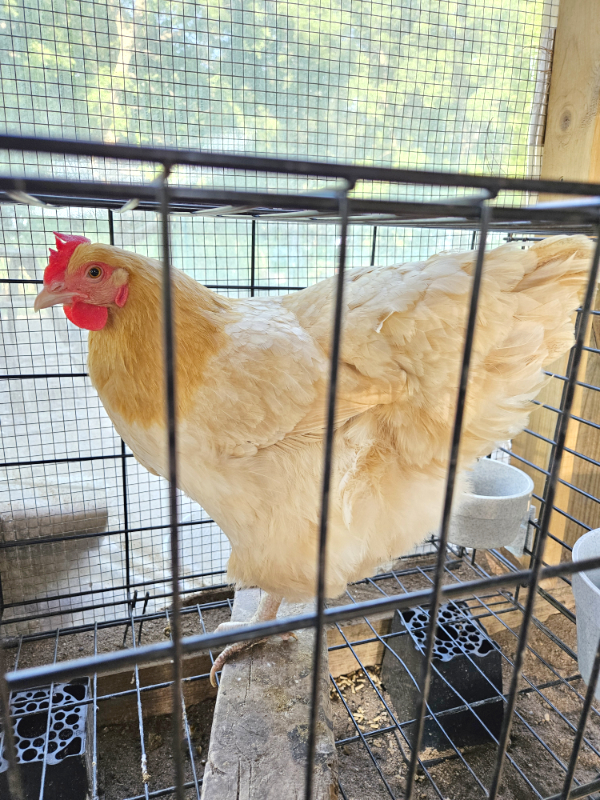
Signs of a broody hen include sitting in the nesting boxes for a long period of time, ruffled feathers when disturbed, growling when you go near, and becoming defensive. When the hen is broody, she will sit on the eggs for 21 days – the amount of time it takes for a clutch to hatch. During this time, the hen only leaves the eggs once or twice a day to eat, drink, and poop.
Some chicken breeds are more apt to go broody than others. For example, my Buff Orpington has a tendency to go broody, whereas my Olive Egger has never done it. It just kind of depends on the hen’s hormones, natural instinct, and the lighting conditions. (It usually occurs during the late spring and summer months.)
They also don’t lay eggs while broody. If you have no intention of having new baby chicks in your flock or if you don’t have a rooster to make baby chicks, then you need to break the hen out of their broodiness. Read my article, “Stopping A Broody Hen – Why & How To Break A Broody Chicken” to learn exactly why and how to do that process.
#4. Older Hens – Why Chickens Stop Laying Eggs
Like I mentioned above, a hen is born with all of the eggs she is going to lay during her lifetime already in her body. She won’t make any more. Once those eggs are used up, then she will stop laying eggs.

Hens first start to lay eggs between 16 and 24 weeks of age on average. They have their most productive egg-laying years during their first two years of life. After that, the amount and frequency decrease each year.
Around 6 to 8 years of age, the hens slow way down and stop laying completely. They have then reached retirement age and are now free-loaders. (We welcome free-loaders here in our flock!)
This timeframe will vary depending on the breed of the chicken as well as whether you provide a source of artificial light year-round. One way to prevent the reduction in eggs is to get new baby chicks every two years or so. That way, you always have some hens in your flock that are in their best egg-laying years.
#5. Stress
Just like people can become stressed, chickens can also suffer from stress. They are creatures of habit and dislike changes. Stress can cause hens to stop laying or at least slow way down on egg production.
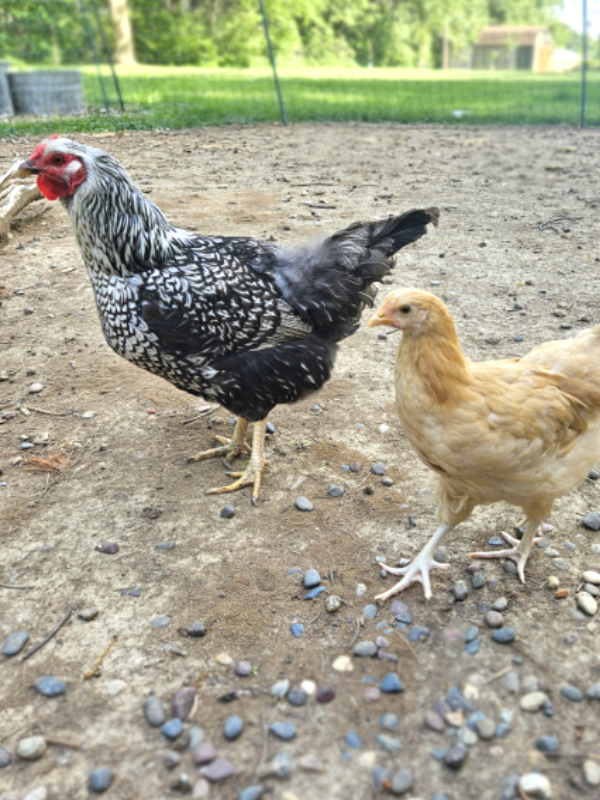
Some examples that can cause stress in a flock include moving or changing their coop setup, adding new chickens to the flock, predator activity, extreme weather changes, changes in routine, etc.
Not all stressors are in your control. Issues like inclement weather and predator attacks are out of your hands. However, take steps to keep your birds as safe as possible in case of an event like that occurring. This includes using hardware cloth on their runs, locking the birds up at night, adding a roof over part of their run to reduce weather issues, and so forth.
In regard to stressors you can control, be mindful of how changes might affect the flock and be prepared for a dip in egg production. Introduce new chickens to your flock slowly; Don’t make drastic changes to their coops or homes, and so forth.
#6. Poor Nutrition Or Water
Another reason why your chickens may stop laying eggs includes poor or improper nutrition and water. It takes a lot of nutrients and resources for a hen to create and lay eggs. If those needs aren’t met, egg production will drastically cease to exist.
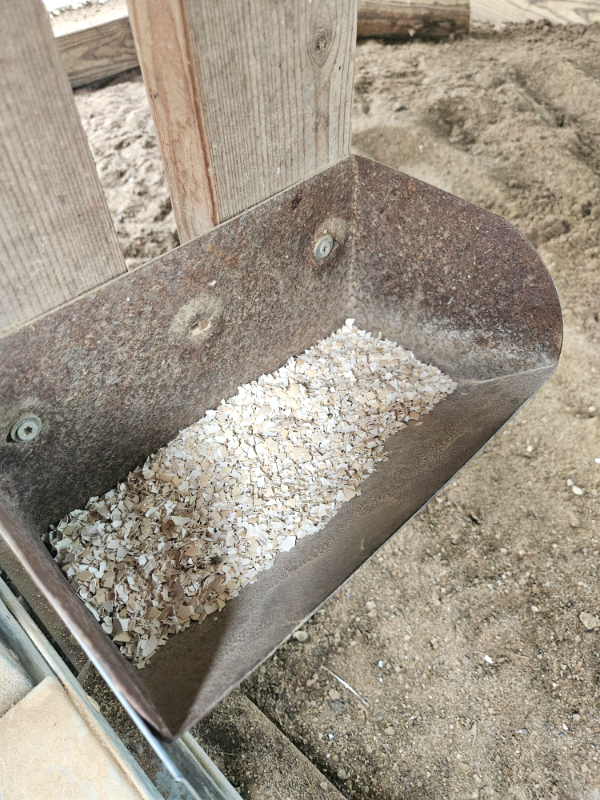
One example is calcium. Hens require calcium in order to create eggshells. That’s why it is recommended to provide hens with access to additional calcium in the form of oyster shells. (We use Manna Pro Crushed Oyster Shell – Product Link). Always keep a container at the ready so a hen can grab a little bit as her body needs.
Always feed chickens a balanced layer feed. Don’t rely on treats, food scraps, scratch, or garden scraps to fill up your birds. The majority of their nutrients should come from their feed. In fact, treats should only account for no more than 10% of their daily diet. A little bit here and there is totally fine.
And don’t forget about water. Chickens need access to fresh, clean water daily in order to lay eggs.
#7. Illnesses Or Other Health Problems
Any type of illness or health problem can cause chickens to stop laying eggs. Unfortunately, there are a lot of diseases and issues that chickens can run into.
Some of the most common parasitic issues include mites, lice, worms, and coccidiosis. Physical or digestive issues include bumblefoot, pecking wounds, and impacted crops. Respiratory diseases are also common for chickens.
If you are getting a reduction in eggs, it might be time to take a good, close look at your birds. Check hens for lethargic behavior, weight loss, reduction of eating or drinking, abnormal droppings, active bleeding or dried blood, respiratory symptoms, or other signs of health problems.
If you have access to an avian veterinarian, these signs might warrant a visit. However, most backyard chicken owners don’t have access to one nearby, so you have to rely on the symptoms of the bird as well as other signs in order to treat and hopefully heal the bird.
#8. Hide And Seek – Why Chickens Stop Laying Eggs
This issue is mainly a problem with backyard chicken owners who allow their flock to free range. If you are seeing fewer and fewer eggs and none of the above problems seem to be going on, it could be that your hens are still laying eggs; you just can’t find them!
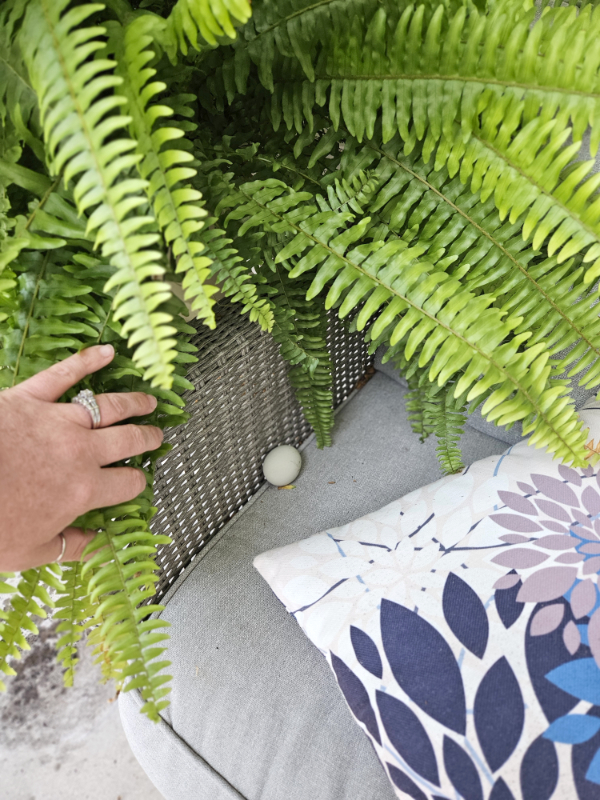
Chickens like to lay eggs in a safe, protected space. If your nesting boxes are obstructed or not very private, then hens might be finding their own places to lay.
If you think your girls are still laying but you can’t find them, it’s time to go on a treasure hunt. Look for hidden nests under bushes or structures, check behind scrap piles, or basically any spot that is hidden from predators. We once kept finding eggs both behind our front porch furniture and tucked behind the throw pillows. (Thankfully I found them before one of us sat down!)
If your hen or hens are hiding eggs, it might be time to retrain and encourage them to use the nesting boxes. Be sure the nesting boxes are dark, safe, and secure before retraining.
#9. Eaten Eggs
The last main reason why it might seem like your chickens stop laying eggs could be that the eggs are actually getting eaten before you get a chance to collect them.
There are loads of predators that like to dine on eggs as much or more than you and I do. Snakes, raccoons, skunks, foxes, opossums, rats, crows, weasels, ravens, and even dogs like to eat eggs. (Many of these animals also like to eat chickens, too, so be careful if you are finding broken or ruined eggs!)
However, it might be that your chickens are the ones eating your eggs! As odd as it sounds, chickens LOVE eating eggs. They go nuts over the gooey insides, but they also snack on the shells as well.
Why do chickens eat eggs? Well, some do it because they are nutrient deficient. They will seek out calcium as well as protein if those items are lacking. Some chickens become egg eaters if they notice a broken egg in the nesting area and get the taste for eggs. Others might peck at eggs if they are bored or stressed.
If you are dealing with a chicken that is eating eggs just because, collect your eggs often. Adding decoy eggs like golf balls or wooden eggs to the nesting boxes can also help. Some people claim that adding mustard to an empty egg can work as well, but I’ve never personally tried it. Separating out the culprit egg eater from the rest of the flock for a few days can also help break the habit.
As for predators, secure your coop and run as much as possible to prevent them from entering. Collecting the eggs frequently throughout the day can also help.
Don’t Panic! – Why Chickens Stop Laying Eggs
If you see a reduction in egg laying, don’t panic. Take the time to consider the time of year, the age of your hens, their behavior and health, their food and water supply, and the other items mentioned on this list before you panic.
Most likely, the drop in egg production is completely normal and a part of the hen’s lifecycle. If not, take steps to fix or alter what you can so you can get back to having more eggs than you know what to do with!
Until next time, thanks for stopping by!
– Chelsea
*This post may contain affiliate links. These are products I have used personally and highly recommend. As an Amazon Associate, I may earn a small commission from qualifying purchases if you purchase items through my links. These links and the ads on this page help to support my family and our semi homestead, so Thank You!
Discover more from Semi Homestead Life
Subscribe to get the latest posts sent to your email.