
Now that October has arrived here in Growing Zone 5, the fall season is in full swing. Even though your vegetable and flower gardens are probably looking pretty empty, there are still plenty of things you can plant in October as long as the weather and soil conditions allow. In fact, some plants even require fall planting in order to produce in the spring.

The month of October is definitely a time of transition for those of us in Zone 5. While some yards might be nice and green during the early part of the month, they might be covered in a dusting of snow by the end. In fact, our first frost and hard freeze often occur sometime during October, so there is a lot of weather variety going on.
Because of this, timing matters. What you can successfully plant will depend on your current weather and the soil conditions, and this can vary year to year. The sooner you get the items in the ground, the better.
Sowing during the fall months allows the plants to become somewhat established before the harsh winter weather hits. Or, in cases like garlic and flower bulbs, fall planting allows the plants to go through the required period of cold weather they need in order to grow in the spring.
I’ve put together a list of four main crops that you can plant in October in order to have successful growth when the warm weather rolls around again.
4 Things To Grow In October For Spring Growth
1. Cover Crops
Cover crops are plants you grow specifically to protect and enrich your soil. They prevent weed seeds from taking over bare soil, help stop erosion, provide nutrients to the soil, reduce soil compaction, and improve drainage.
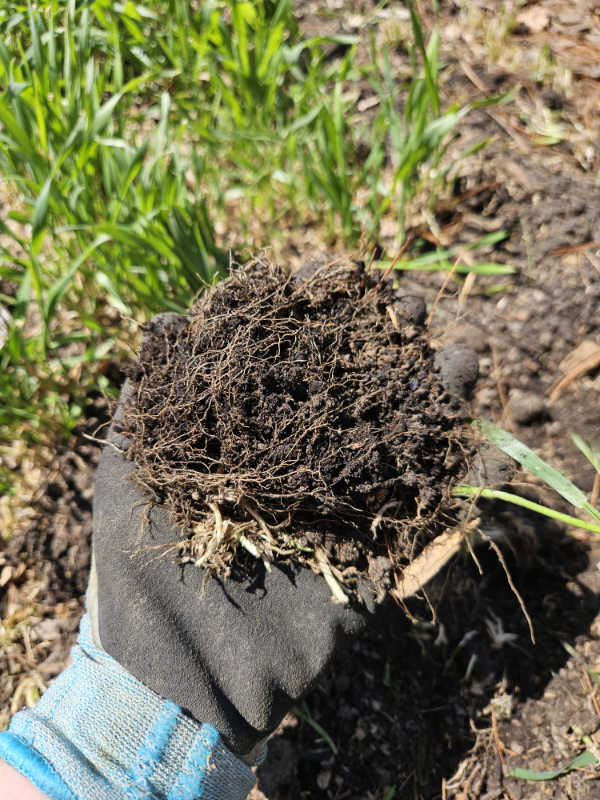
In the fall, after you’ve pulled all of your usual garden plants out of the ground, that’s when you plant cover crop seeds. What you grow kind of depends on your soil goals and your location. For example, some plants add nitrogen back to the soil while others are meant to grow quickly and cover bare soil.
What you plant also depends on what time of the year you are sowing the seeds. Some crops grow faster than others, while others require longer to establish before the ground freezes.
Different Cover Crop Options
Winter Rye: (Also called Cereal Rye.) This crop germinates fast, grows quickly, goes dormant over winter, then continues to grow when the weather warms up in early spring. It is the best choice for late October sowing. Winter Rye might require mowing or trimming to prevent it from going to seed. You have to till it in or kill it off before planting in the spring.
Oats: My favorite choice. Oats are another fast-growing option but unlike rye, it gets killed off in colder climates. The dead plant residue can then be tilled into the soil or planted through in the spring. It’s best for early October sowing.
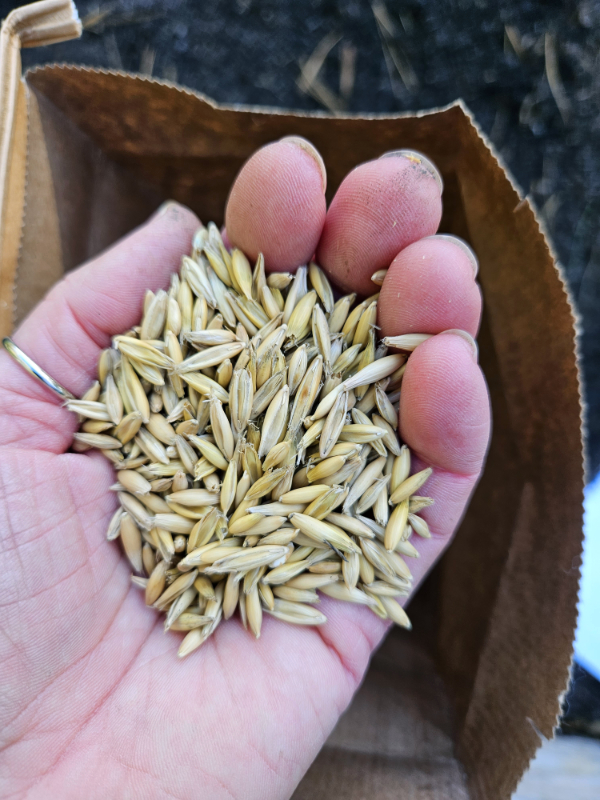
Winter Wheat: This is one I haven’t tried before, but winter wheat is a cheaper overwintering grain. While it doesn’t fill in as thickly as rye, it is easier to kill off in late winter/early spring.
Clover and hairy Vetch: Both of these legumes help to add nitrogen back to the garden soil. They do better when they are planted in late summer to early fall. Clover and Hairy Vetch need to be tilled in order to stop their growth before spring planting.
Winter Peas: Another nitrogen-fixing cover crop, Winter Peas also need to be planted in late summer through early fall. While some winter peas are winter-kill, most are cold-hardy and will need to be tilled in before spring planting.
How To Plant & Grow Cover Crops
In order to plant your cover crop seeds, the soil still needs to be workable. In addition, you want a bit of warmth to allow the seeds to germinate and start growing. So the earlier you plant the seeds in October (or sooner), the better. Otherwise, you are simply covering your bare soil with birdseed!

To read more in-depth about planting and growing cover crops, check out my article, “Planting A Garden Cover Crop – Protect And Improve Your Soil”. However, here’s a quick guide to get you started:
- Clear out the foliage and plant matter from the soil.
- Loosen up the soil, especially the first couple of inches.
- Scatter the seeds across the soil according to the variety and recommended seeding rate.
- Lightly rake them into the soil.
- Water well with a light mister or shower setting to reduce the chances of the seeds spreading.
- If plants start to grow too tall, mow them short to prevent them from going to seed.
2. Flower Bulbs – What To Plant In October
Various flower bulbs and corms require a period of cold weather in order to bloom in the spring. This is called “vernalization.” (This is often confused with “cold stratification,” which refers mainly to seeds.)
Vernalization is the timeframe of about 10 to 16 weeks of cold weather that is at or below 35 to 45º Fahrenheit. This triggers a biochemical change that I won’t go into detail here.
By planting these bulbs in early fall, you can be greeted by early flowering color first thing in the spring. Some of the best bulbs to plant for spring blooming are tulips, daffodils, crocuses, hyacinths, and ornamental alliums.
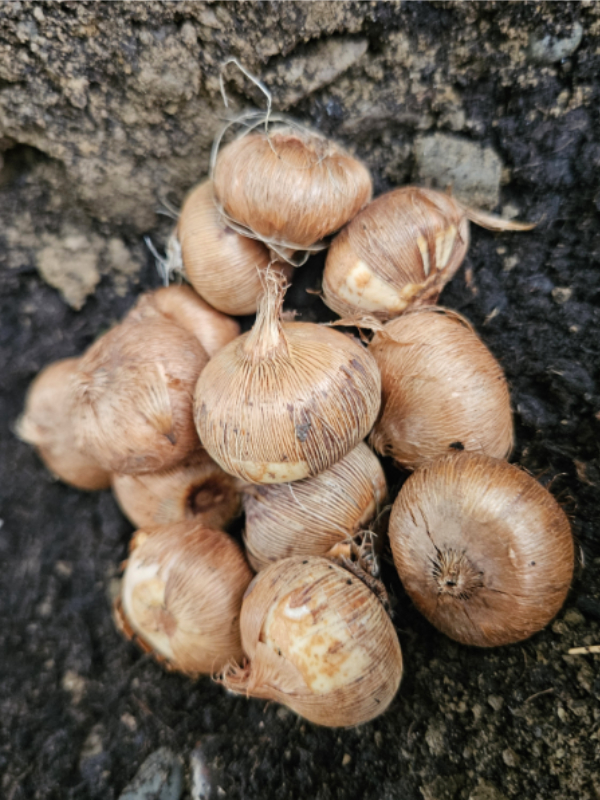
How To Plant Flower Bulbs
For specific growing requirements, be sure to research the individual flower bulbs or corms you have. Some flowers aren’t the best choice to plant during the month of October. However, here is a quick guide you can use for those that are:
- Plant flower bulbs and corms any time during the fall as long as the ground is workable. For here in Growing Zone 5, I aim for mid to late October.
- Pick a location with fertile soil that drains well. Flower bulbs will quickly rot in soil that is constantly wet.
- Use the planting depth for the specific flower bulb you are growing. Most often, that is about two to three times the bulb’s height. Place the bulbs with the pointy end up.
- Cover with soil and water well. There is no need to water again unless you experience an extremely dry period of two weeks or more.
- Add a 2 to 3-inch covering of organic mulch to protect the bulbs during the winter.
3. Hardneck Garlic – What To Plant In October
Garlic is my number one favorite crop to grow. Why? First, it’s easy to plant. Second, it grows easily here in Zone 5. Third, it’s a crop that I plant in the fall, leave it alone, and it starts to sprout in early spring – no additional work needed! Lastly, I LOVE to eat homegrown garlic!

Hardneck garlic, specifically, requires a period of cold weather in order for it to trigger bulb and clove formation. This can range anywhere between 4 and 6 weeks of temperatures below 40º Fahrenheit.
In order to get garlic cloves in the ground with enough time to produce a few roots in the fall, aim to plant it around 4 to 6 weeks before the ground freezes. For us here in Zone 5, that usually lands around the middle of October.
However, just because it is October 31st doesn’t mean you can’t still successfully get garlic in the ground. Use the soil and current weather as a guide more than your calendar.
Planting Garlic Cloves
I have a full in-depth guide on planting hardneck garlic that you can find here: “Planting Garlic In The Fall For A Huge Summer Harvest”. However, here are a few quick tips to get you started.
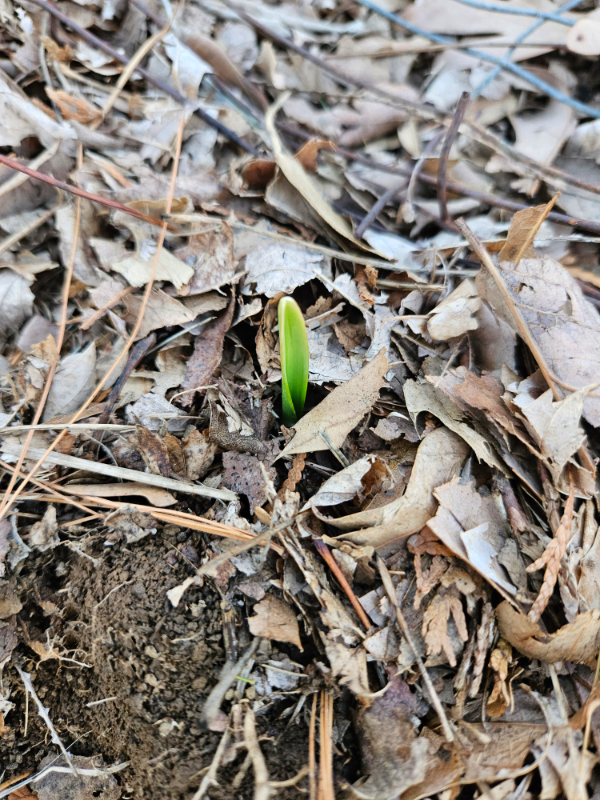
- Choose garlic seed specifically sold by a grower for best results. Most garlic sold in grocery stores is softneck garlic, so be sure to get the variety that is right for your growing conditions and location.
- Pick a location with full sun and fertile, loose, and well-draining soil. Till or loosen up the top 3 to 4 inches of soil.
- Separate your garlic bulbs into individual cloves. Don’t remove the papery skin since this helps protect the clove. Choose the biggest, firmest cloves for planting.
- Create a long trench in the soil about 3 to 4 inches deep.
- Place each clove into the soil about 1 to 2 inches below the surface. The pointy end goes up, and the flat root end points down. Space each clove about 4 to 5 inches apart.
- Cover the row with soil and add about an inch of mulch. I like to use shredded leaves or pine needles. Water well and continue watering every so often until garlic germinates or the ground freezes.
4. Trees & Shrubs – What To Plant In October
While most people might associate spring with planting trees and shrubs, fall time can actually be a great time to plant. The cooler fall weather puts less stress on plants, while the still warm soil allows the roots to establish somewhat before the ground freezes. Another great bonus of fall planting is that you can often get heavy discounts on trees and shrubs at garden centers and nurseries as sellers aim to get rid of their inventory before winter hits.

However, timing is important here. The earlier in October you can plant these items, the better.
The best choice for planting is always native trees and shrubs. These plants establish quickly and are designed to thrive in your exact growing location and weather. They also help support your local birds and other wildlife.
Other great choices are many different deciduous trees, hardy deciduous shrubs, and many fruit trees. Always check to make sure the particular variety you aim to plant is good for fall planting in Zone 5. We have personally planted multiple different fruit trees during the fall and actually prefer it to spring planting.
Tips For Planting Trees And Shrubs
Before you plant any tree or shrub in October, always research that particular variety. Not all items will be good candidates for fall planting. For those that are, here are a few tips:

- Pick a location with the mature size of the tree or shrub in mind. Check for nearby structures, sunlight exposure, property lines, etc. That little 3- to 4-foot tree sapling won’t stay that little for long!
- Ensure that the soil is fertile and has good drainage. Dig a hole that is a few inches wider than the root ball and as deep as the plant is in the pot or container.
- Place the plant into the hole. Flare out the roots to help them spread easily.
- Backfill with soil and tamp down a few times to help the soil settle around the roots. Water well.
- Add a mulch around the base of the plant and the root zone. Do not allow the mulch to actually touch the trunk or shrub stems. Instead, create a “donut” shape around the base of the plant.
- Continue to water every few days until the ground freezes.
Until next time, thanks for stopping by!
– Chelsea
*This post may contain affiliate links. These are products I have used personally and highly recommend. As an Amazon Associate, I may earn a small commission from qualifying purchases if you purchase items through my links. These links and the ads on this page help to support my family and our semi homestead, so Thank You!
Discover more from Semi Homestead Life
Subscribe to get the latest posts sent to your email.