
When it comes to cooking with cast iron, there are a few main reasons why your food sticks to your cookware. Thankfully, a few simple changes can leave your cast iron cookware working like non-stick and cooking beautifully!
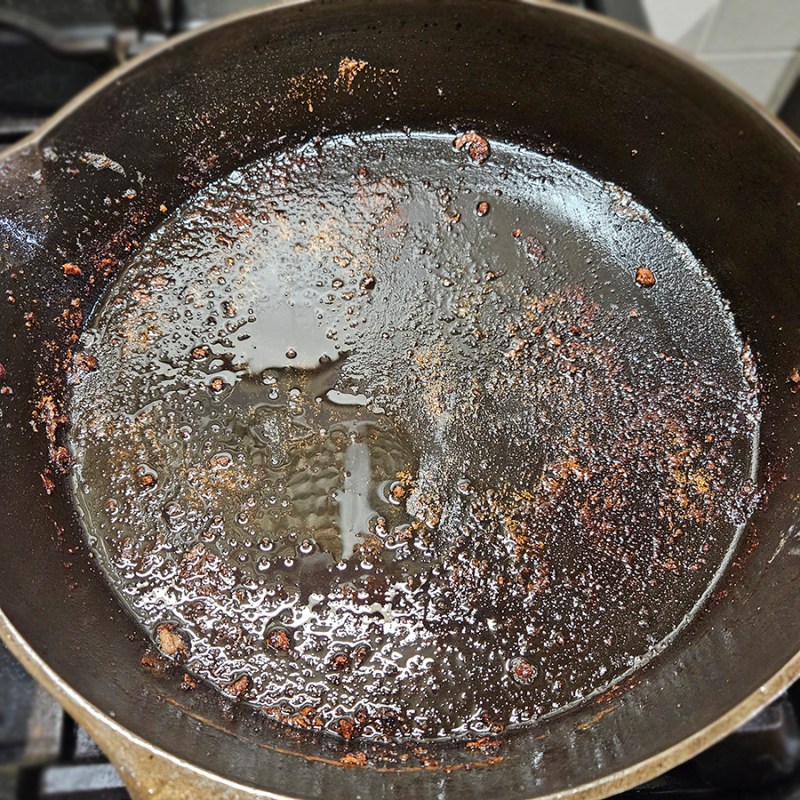
Stuck on, left behind food is a huge source of frustration for many people, especially when they are first learning how to use cast iron cookware. It’s the main reason why so many people give up before they really give cast iron a fighting chance.
Here you’ve got a pan that’s piping hot, and you hear that amazing sizzle as you gently place your perfectly seasoned steak into the pan. As you go to turn it, all that seasoning and goodness gets left behind in the pan instead of on your steak, leaving you with a beige piece of meat instead of a perfectly seared steak.
Or, how about the dreaded fried egg problem? You crack an egg into a pan you thought was seasoned properly, only to have half the egg sticking to the pan as you go to flip it. What a waste of food, as well as a pain in the butt to clean afterwards!
Whatever your dilemma is with food sticking to your cast iron cookware, this article will help walk you through the steps to identify the issue (or issues) and fix them so you can become a master cast iron cooker!
Improperly Seasoned Pan
Let’s start with one of the most common reasons why your food is sticking to your cast iron cookware. That issue is using an improperly seasoned pan. You get a well-seasoned pan by heating some type of oil or fat to high heat.
Without getting too scientific, in order to create a non-stick cooking surface on your cast iron, you have to use a process called Polymerization. This occurs when an oil or fat is heated to a high temperature (often referred to as a “smoke point”) that allows it to chemically bond with the surface of the cast iron cookware.
This process is what creates the smooth, hard, non-stick surface. It also creates the shiny and black appearance that is associated with cast iron cookware. The more you cook with your pan, the better the seasoning gets. But without polymerization, your food will stick to the pan. Additionally, sometimes the seasoning can wear down over time or need a kickstart if this is a newer pan.
How To Fix It
The process of polymerization might sound difficult, but it’s really not. The goal is to pick an oil or fat you are comfortable using that has a relatively high smoke point. You use this oil to “season” the cast iron piece.
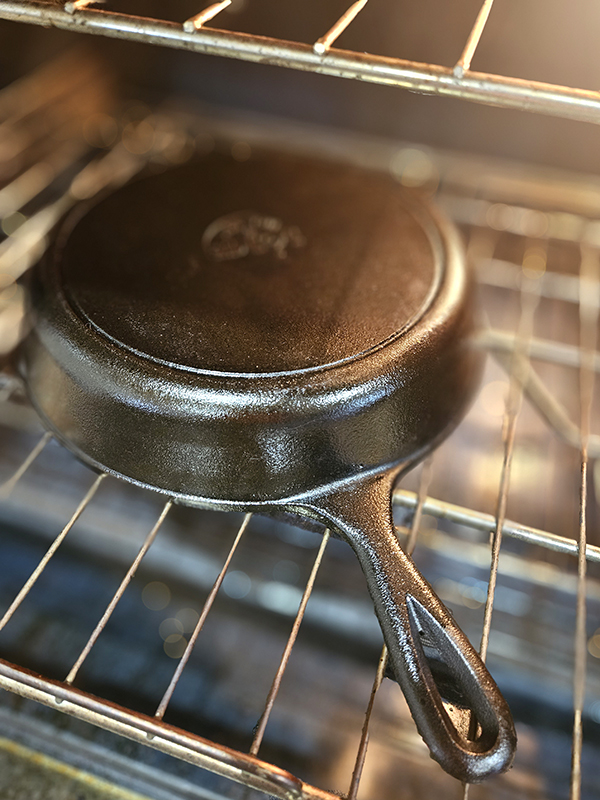
To season your pan, add a thin layer of this oil or fat to your pan. (“Thin” being the keyword here!) Turn the pan upside down in your oven and bake it at 400º Fahrenheit for an hour. Allow the pan to cool completely after baking. Repeat this process for the best results.
Even brand-new pans like my 12″ Lodge Seasoned Cast Iron Skillet (Product Link) that are labeled as “pre-seasoned” should be seasoned a few times before using. Trust me on this one, it will make a huge difference in how you cook!
If you want even more details on seasoning cast iron, I have a whole article dedicated to the topic of seasoning and reseasoning cast iron cookware that you can check out. It will walk you through the entire process step-by-step and more in-depth: “How To Season and Reseason Cast Iron Cookware”.
Not Heating It Properly – Why Food Sticks To Cast Iron
The second most common reason why food sticks to your cast iron is that the pan isn’t heated properly. Now, this can be because the pan is either too hot or not hot enough.
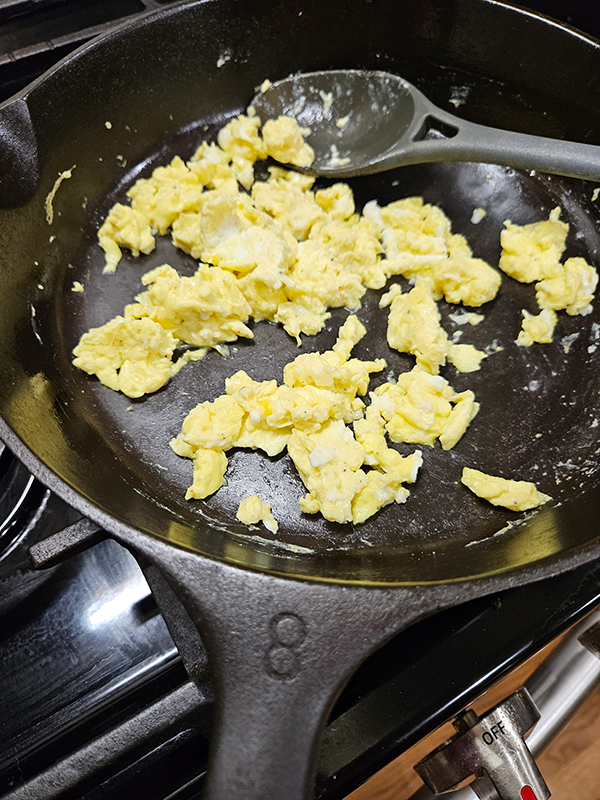
If a pan is too cold or unevenly heated, then the proteins in your food will bond with the surface of the cast iron instead of sealing off. This causes them to stick, no matter how well seasoned your pan is.
On the flipside, if the pan is too hot, then it can burn foods instead of cooking. The food will also cook unevenly, with the part directly over the heating element cooking faster than the rest.
How To Fix It
The biggest tip here is to preheat your cast iron skillet for 3 to 5 minutes. Yes, it seems like a long time to wait, but it is crucial for cast iron cooking. While cast iron retains heat well, it takes a bit for it to actually heat up evenly.
Give the skillet or pan time to heat up before adding your oil or fat. Then, allow the oil or fat to heat over a lower heat before adding your food.
This does take a bit of trial and error before you find the sweet spot for your pan, stove, and the food you are cooking. As a baseline, though, since cast iron retains heat well, you normally want to start at a medium-low temperature and go from there.
Very rarely will you ever need to go above medium. Sometimes you will want to go to medium-high, like if you want a quick sear on a steak. But most often, you will be cooking at a medium-low temperature when using cast iron.
You have likely heard that you want your cast iron to be searing hot before adding food to it. That’s true, but it doesn’t mean you have to use a high heat temperature setting to achieve a properly heated pan.
Not Using Oil Or Fat When Cooking – Why Food Sticks To Cast Iron
Even a well-seasoned pan needs a little fat or oil when cooking. This light layer of oil helps to create another layer of protection between the bottom of the pan and the food being cooked.

I struggled with this a bit in the beginning because I always thought oil and fats were bad and should be avoided. However, anymore, I know that when used sparingly, they can be beneficial.
How To Fix It
Well, this is pretty simple – add a bit of oil or fat to your preheated pan and allow it to heat up before adding your food. But how much oil do you need, and what type of oil or fat works best?
Some foods will require more oil or fat than others. Basically, if the food item you are cooking has a good amount of fat or oil in it already, you can use less. If not, add enough to cover the bottom of the pan with a thin layer.
For example, I usually do not add any oil when I am cooking our local farm-raised ground beef. There is enough fat in the beef itself that it keeps the meat from sticking to my well-seasoned pan. However, if I am cooking eggs – an item that is well known for sticking to cast iron – I add a good amount of bacon grease prior to adding the eggs.
As for the type of oil or fat you use, that is kind of a personal preference. I choose what I use based on what I am cooking. So, if I am cooking something that can benefit from the flavors of bacon, then I use bacon grease. If I am cooking pretty much any type of beef or chicken, then I use rendered beef tallow. If I need a delicate flavor, then I use coconut oil.
I do try to stick with using more natural fats and oils. You can also use items like vegetable oil or Crisco, but those tend to be more highly processed. You can see my top suggestions on what to use with cast iron cookware here: “The 4 Best Oils And Fats For Cast Iron Cookware”.
Turning Foods Too Early
Another reason why food sticks to cast iron cookware is turning or stirring it too early. Most foods need to create a sear themselves before they can naturally release from cast iron cookware.
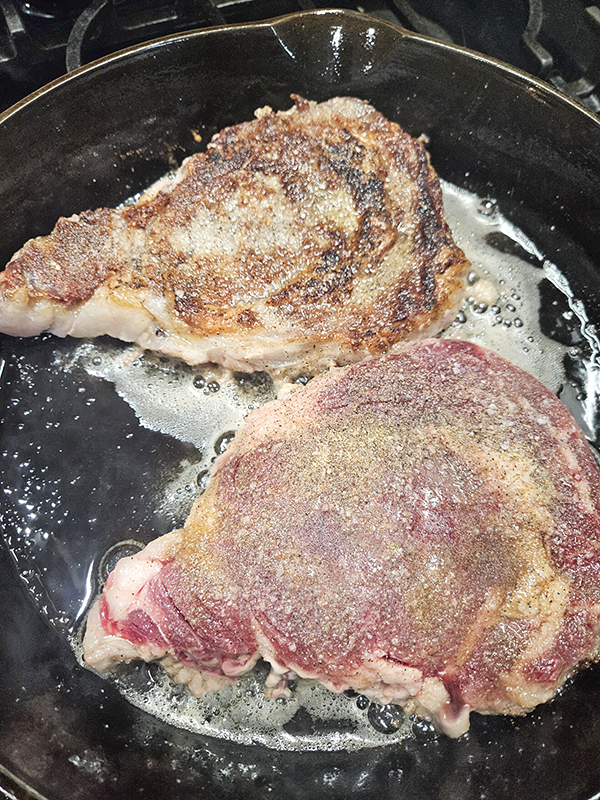
This is especially an issue with foods like eggs, steaks, pancakes, bacon, chicken, etc. Moving these foods or flipping them before they are ready will cause sticking.
How To Fix It
This is kind of another one of those trial-and-error resolutions, but patience is the key! The goal is to wait to flip the food until it has had time to create a natural sear.
To do this, allow the food to cook for several minutes (depending on the food) without disturbing it. Seriously, don’t touch it, don’t wiggle it, don’t stir it, nothing!
Once it seems like the food has started to brown or cook around the edges, give it a little nudge with your spatula or metal turner. If the food moves, then it’s ready for turning or flipping. If it sticks, it might need more time to finish searing.
Other Possible Reasons Food Sticks To Cast Iron
Besides those main reasons, there are other possible culprits for food sticking in cast iron:

Food Residue – Sometimes, your pan might have excess or leftover food residue from the last time you cooked with it. This uneven surface and buildup can cause sticking. After each use, wipe your pan thoroughly or wash it in warm water. If needed, dry the pan completely and add a light coat of oil. Repeat this process every time you use it.
High-Moisture Foods – If you are cooking foods that have a large amount of moisture, it can cause steaming instead of searing. This steaming can lead to sticking. Foods like marinated meats, frozen foods, and vegetables can often be culprits. To help prevent it, avoid overcrowding the pan and cook the food in smaller batches if needed.
Delicate Foods – Some foods, like fish, are a bit more delicate and tend to have more issues with sticking. I’ve even run into issues having thin-cut bacon sticking way worse than thick-cut bacon. Avoid cooking these products in a brand-new cast iron skillet. Instead, wait until the pan has been used a few times and is well seasoned before attempting them. If you can’t wait, cook them low and slow and don’t touch them until they’ve had a chance to naturally sear.
Just remember, cast iron cooking isn’t hard; it just has a bit of a learning curve you will need to adjust to. But the more you use and reseason your cast iron, the better and better it gets, and the more non-stick it becomes as well.
For More Cast Iron Tips:
- Cooking With Cast Iron – 5 Simple Steps To Cook Like A Pro!
- Common Myths & Facts About Cast Iron Skillets & Other Cookware
- How To Easily Restore Cast Iron Cookware Using Your Oven
- Refinish A Modern Cast Iron Skillet So It Works Like A Vintage One
Until next time, thanks for stopping by!
– Chelsea
*This post may contain affiliate links. These are products I have used personally and highly recommend. As an Amazon Associate, I may earn a small commission from qualifying purchases if you purchase items through my links. These links and the ads on this page help to support my family and our semi homestead, so Thank You!
Discover more from Semi Homestead Life
Subscribe to get the latest posts sent to your email.