
When it comes to garden pests, three of the most common ones are cabbage moths, cabbage loopers, and cabbage butterflies. Often, these three get used interchangeably, so it might be confusing if you are wondering which pest you are dealing with in your garden.
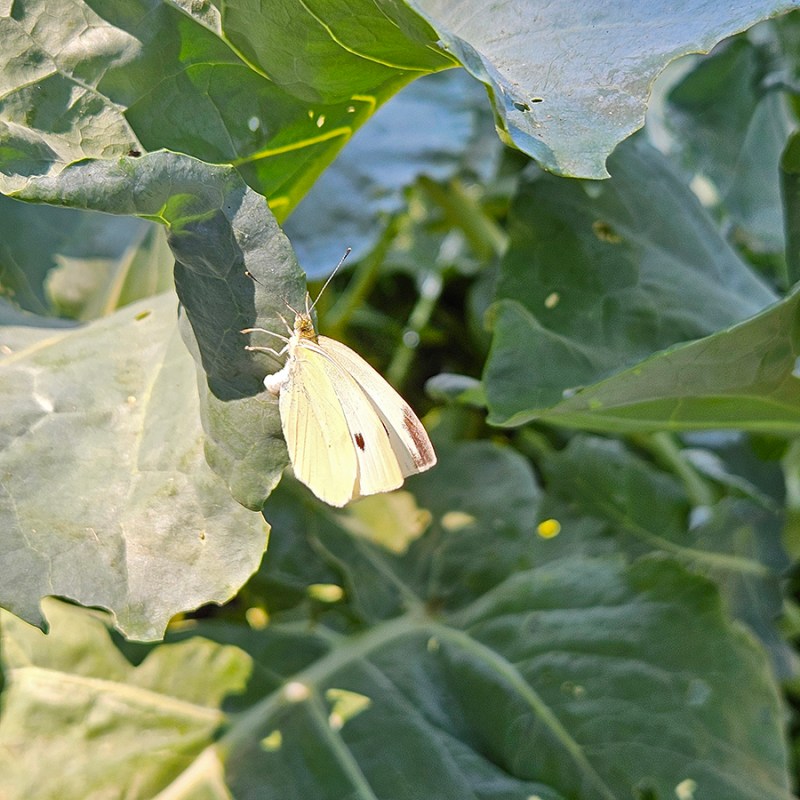
These three pests differ not only in their name, but in their appearance and habits as well. One is creamy white, the other two are mottled brown. One comes out during the day, the other two at nighttime. Even how they move and lay their eggs is different.
However, there are also several similarities between these three flying and creepy-crawling insects. One of which is the extensive damage they can all cause to your cabbage plants. Both tender young seedlings and mature plants can suffer major damage from all three pests, sometimes preventing your plants from producing harvestable products at all.
Thankfully, how you prevent and get rid of cabbage moths, loopers, and butterflies is the same. In this guide, I’ll walk through how to identify which of the three you are dealing with as well as some safe methods for preventing or removing them.
How To Identify Cabbage Moths (Mamestra brassicae)
Cabbage moths start out as tiny, pale, oblong white eggs. The eggs are laid one at a time but in clusters on host plants. A single female can lay up to 350 eggs on a single leaf, with over 2500 eggs laid in total. (That’s a lot of eggs from just one moth!) The eggs take around ten days before hatching into larvae, but this timeframe can vary depending on the temperature.
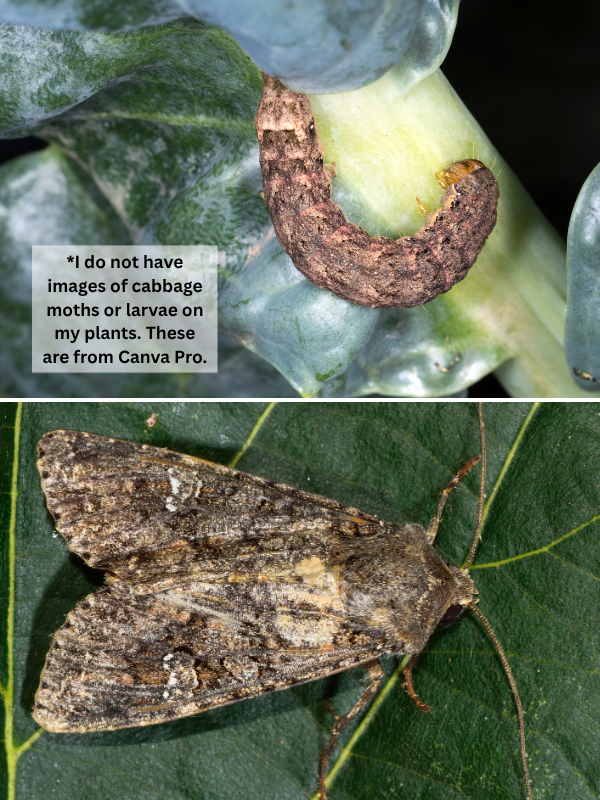
The cabbage moth spends about four to six weeks in the larval or caterpillar form. Most start out light green in color but turn darker, and some have shades of brown. Several have stripes or spots on their backs or sides.
It’s at this stage that the moths are the most dangerous since they feed on the host plants. The larvae can be hard to spot since they are most often on the undersides of the leaves.
The next step is to turn into dark brown, shiny pupae. They do this by burrowing into the soil and creating cocoons. After about one to two weeks (or longer if they are overwintering), the moths appear. The moths feature brown, gray, green, or black colorings and are often mottled in appearance. They are mostly active during the nighttime hours.
Once copulation occurs between a male and female, the female moth will lay eggs. Then the entire process starts all over again. Depending on your location, two to three generations can occur in the same growing season. That makes for a lot of cabbage moths flying around – and a lot of larvae eating your plants! Cabbage moths are migratory and head south in the winter.
How To Identify Cabbage Loopers (Trichoplusia ni)
Cabbage loopers are a medium-sized moth that are often called “owlet moths”. They start out as tiny, light yellow or creamy white dome-shaped eggs. You will often find the eggs on the underside of either higher up or lower leaves on plants. One female is capable of producing anywhere from 300 to 1400 eggs.
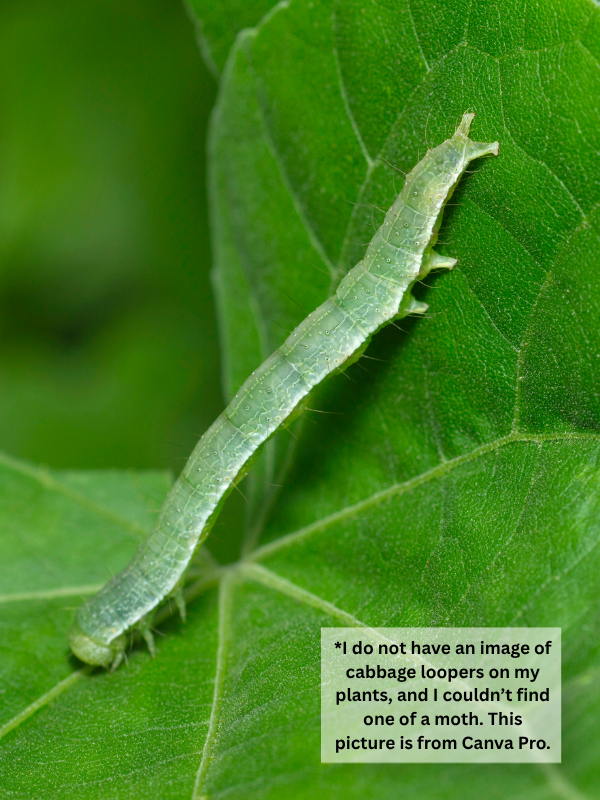
The eggs are laid one at a time and appear singularly on the leaves. They hatch in around three days as bright green, thin larvae with a white stripe running down the sides.
These larvae immediately begin eating the host plants. Typical worms creep along the ground. However, cabbage loopers move a bit differently because they don’t have any legs in the middle of their bodies. Instead, their bodies bend upward in an arch as the back legs move up to meet the front legs. Then, they straighten out when the front legs move forward. This odd way of moving gives them the nickname of “inchworm”.
After about two to four weeks, the larvae pupate directly on the plants. You can identify them as a mass of thin white threads. After about one to two weeks, adult moths emerge. The moths have gray-brown front wings and lighter brown hind wings.
Like cabbage moths, cabbage loopers are nocturnal in the adult stage. The looper moths use the plants as cover during the day and then come out at night, right before sunset. Cabbage loppers are also migratory.
How To Identify Cabbage Butterflies (Pieris rapae)
Cabbage moths, also called “cabbage white” or “small whites”, start out basically the same way as the other two types of cabbage worms: as tiny, light yellow eggs. The main difference between these and the cabbage moth eggs is that they are laid individually, usually on outlying plants. The eggs have a bullet-like shape and are often on the underside of the leaves.
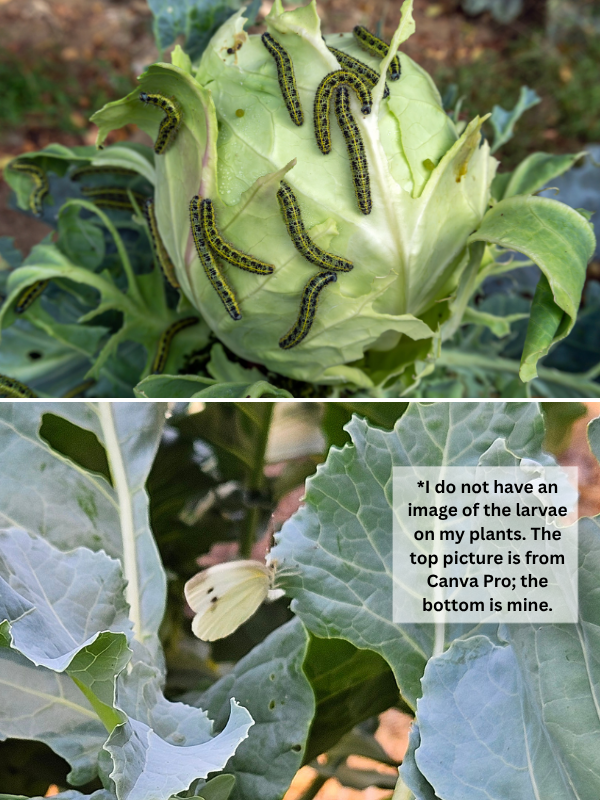
The larvae that emerge after one to two weeks are often described as velvety and blue-green in color. They usually have tiny black spots along their body and a yellow line running along their bodies. The larvae live mostly on the underside of the leaves, making them difficult to spot.
After about two to three weeks, the pupae are laid on the leaves of the host plant and are a mottled yellowish-gray color. They are slightly pointy-shaped on both sides. The butterflies emerge in one to two weeks.
The adult butterflies are easily identifiable thanks to their creamy yellow-white coloring and the addition of small black dots on the wings. The females have two dots on each forewing, whereas the males only have one.
Cabbage butterflies can migrate, but they can also overwinter in the pupa form. Overwintering is most common here in the Midwest and in Northern locations.
When & How To Recognize Damage To Crops From Cabbage Worms
Since cabbage moths and loopers are migratory, you will start to see the adults in late spring through the fall months. The cabbage moths, however, overwinter in the pupae stage just like many other butterflies. Because of this, you will often start to see them as early as March in warmer locations. In fact, they are some of the first butterflies to appear.
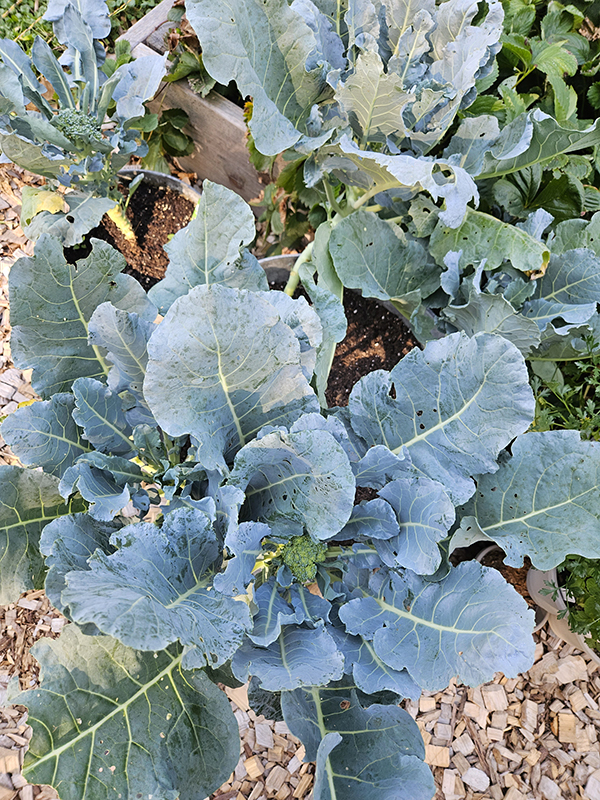
All of these three pests cause extensive damage to cabbages, broccoli, and other cruciferous plants (in addition to any other host plants they come across). While the butterflies and moths in the adult stage are great pollinators, they are considered pests due to their damage at the larval stages.
At the larval stage, the worms consume not only the leaves but also the developing cabbage heads as well. The larvae can even burrow down into the core of the fruit and vegetables, making them useless for harvesting.
With younger plants, this damage can be devastating. Older plants can usually withstand some damage, but the harvestable parts of the plant can become useless. A few holes in the leaves here and there are to be expected. It’s when the plants are overtaken by the worms that it becomes a major issue.
In addition, the excrement that the worms leave behind can also be damaging. A lot of their waste contains fungal and bacterial diseases that can infect the plants.
Food & Host Sources
Cabbage moths, loopers, and butterflies in the larval form are not picky and will feast on any number of host plants. However, you will most often see the worst damage on broccoli, cauliflower, kale, and cabbage – hence their namesake.

This is not an exhaustive list of the host plants, but you can also see them on beets, brassicas, calendula, chrysanthemums, dianthus, lettuces, mustard, nasturtiums, onions, peas, potatoes, radishes, rhubarb, spinach, sunflowers, and tomatoes.
Unfortunately, for those living in warmer climates, you might see two to three different generations of cabbage worms in one growing season. That can equal a ton of damage if left unchecked!
Preventing Cabbage Worms – Loopers, Moths & Butterflies
One of the best ways to deter cabbage worms, loopers, and butterflies is to prevent them from getting to your plants in the first place!
Floating Row Covers: As soon as you plant crops like cabbage, broccoli, kale, and so forth into your garden, set up some type of lightweight row cover. This will help keep the butterflies from being able to get to your plants and lay their eggs.
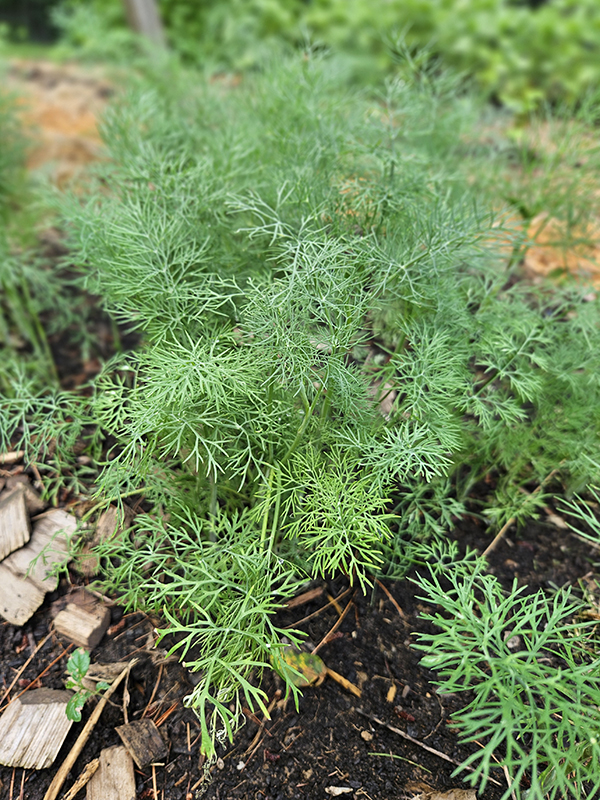
Companion Planting: Another option is to use companion planting to your advantage. I love trying to take advantage of this type of deterrent to pests whenever I can. Most cabbage worms do not like strong scents, so herbs like dill, lavender, mint, oregano, rosemary, sage, and thyme are great options.
Vegetables like onions, chives, and garlic are also good deterrents. You can even interplant strong-scented flowers like marigolds and geraniums around more desirable plants. (See my article, “The Many Benefits Of Growing Marigolds”.)
Sacrificial Crops: This isn’t my first recommended route to go, but you can plant sacrificial crops. These are other types of plants that cabbage moths, loopers, and butterflies like. However, you aren’t as upset if they get ruined. Nasturtium and mustard are two great sacrificial crops that do work. Just keep in mind that these crops might encourage even more pests to visit your garden.
Additional Planting: Instead of fighting the battle, some people prefer to plant more crops than they need for harvesting. The thought is that there is more to go around for both the pests and you, so that’s always an option.
Getting Rid Of Cabbage Worms – Moths, Loopers, and Butterflies
Even if you try all of the above tips, you may still end up with a few cabbage moths. Thankfully, all is not lost! Try some of these methods to help reduce or even eliminate cabbage worms altogether.

Hand Picking: While it might not be the most glamorous way of getting rid of cabbage moths, loopers, and butterflies, hand picking is fairly effective. The key is to try to find and squish or remove the eggs and worms. The eggs are hard to see since they are tiny, though. But if you’ve seen the butterflies or moths around, then chances are there are eggs left behind.
As for the worms, look for damage to your crops or for fecal matter left behind. If you see either of those, then the worms shouldn’t be far behind. Make sure to check the underside of the leaves, too.
Neem Oil: A great organically approved product to use is neem oil. I have used this before on both my indoor houseplants as well as plants in my vegetable garden, and have had great results. This is the exact product I use, but you can also find it in ready-to-go sprays: Bonide Captain Jack’s Neem Max (Product Link). Be sure to follow the directions to a T to avoid harming beneficial insects.
Other Good Methods – Cabbage Moths, Loopers, and Butterflies
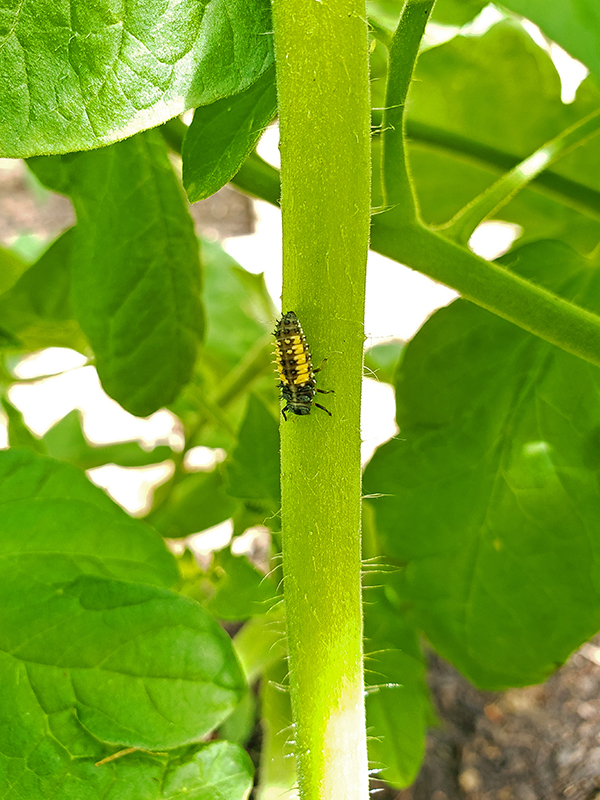
Natural Predators: A great way to get rid of cabbage worms is to encourage natural predators. Most often, that includes lady beetles, ants, and spiders. They most often eat the eggs and larvae of these pests.
Trachinid flies and braconid wasps are other predators of cabbage worms. These insects will parasitize the larvae and kill them, basically from the inside out. The adult moths and butterflies can become victims of multiple species of birds, like goldfinches, sparrows, and skylarks.
Bacillus thuringiensis (Bt): Bt is a type of soil bacterium that is often used as a biological insecticide for pests like cabbage worms. However, some species of cabbage worms are starting to become resistant to the use of Bt and other biological and synthetic products.
Corn Meal or Flour: While I’ve never tested these two methods, some sources say you can kill cabbage moths by wetting down the foliage and sprinkling on corn meal or rye flour. The worms consume the corn meal, swell, and die, whereas the flour dehydrates them. Might be worth trying?
Other Garden Pests
For information about even more common garden pests, check out some of my other articles:
- Defeating Squash Vine Borers
- All About Japanese Beetles
- Get Rid Of Japanese Beetles
- Battling Squash Bugs In Your Vegetable Garden
- How To Deter Rabbits
- Common Sweet Corn Pests
Hopefully, you can now identify cabbage moths, cabbage loopers, and cabbage butterflies and know what to do to both prevent them from using your garden as chomping grounds as well as get rid of them if damage is noticed!
Until next time, thanks for stopping by!
– Chelsea
*This post may contain affiliate links. These are products I have used personally and highly recommend. As an Amazon Associate, I may earn a small commission from qualifying purchases if you purchase items through my links. These links and the ads on this page help to support my family and our semi homestead, so Thank You!
Discover more from Semi Homestead Life
Subscribe to get the latest posts sent to your email.